
How EPAL Pallets Support Just-in-Time Logistics
January 24, 2026
EPAL Pallets for the Food & Pharma Industry
February 18, 2026

How EPAL Pallets Improve Forklift Safety
Forklifts move fast. Loads sit high. A small mistake can turn into a serious accident.
Many safety programs focus on driver training, traffic lanes, and floor markings. Those matter. But one piece is often overlooked.
The pallet.
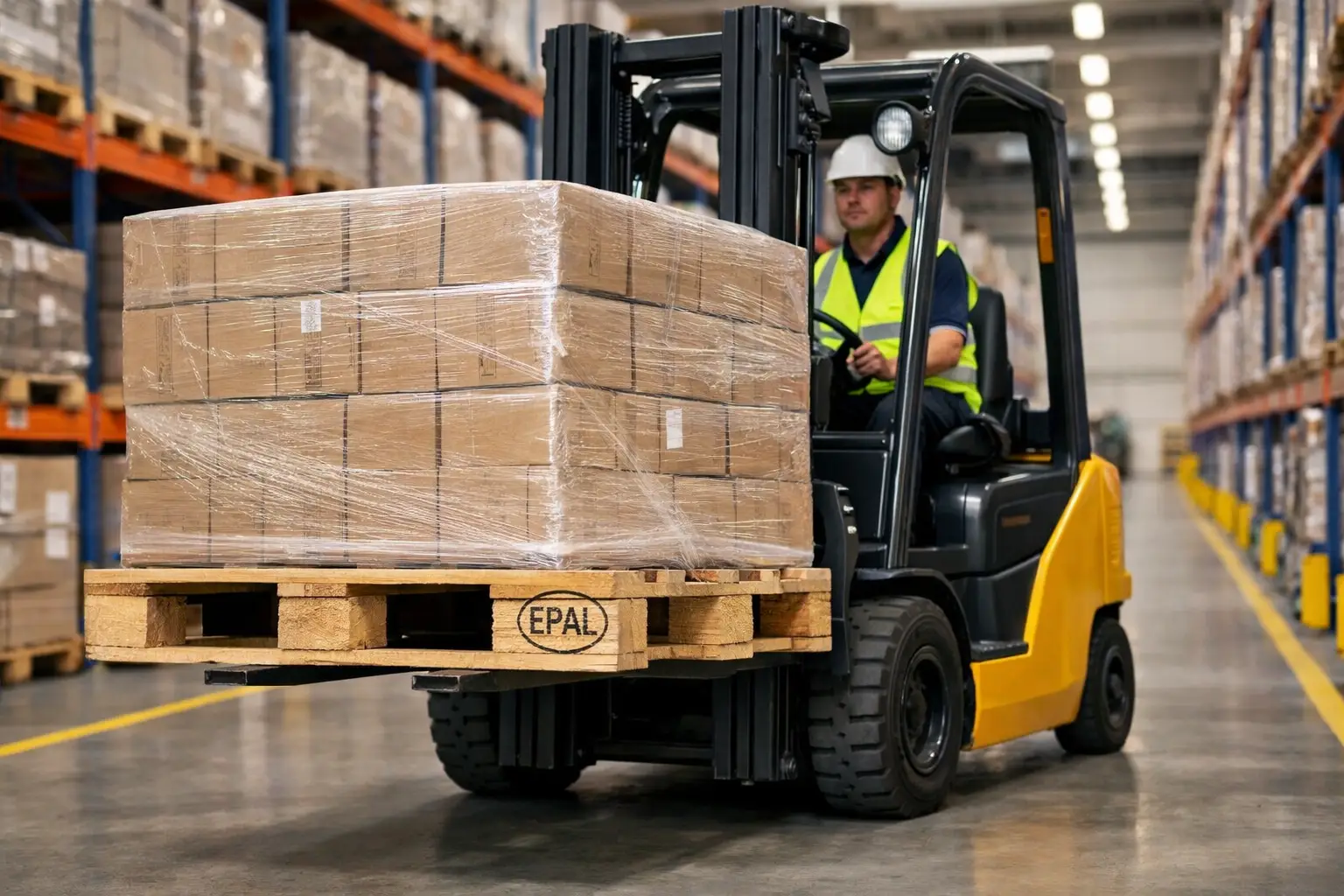
Cracked boards, loose nails, and uneven entry points make forklifts harder to control. Loads shift. Forks snag. Operators brake suddenly. That is how near misses start.
Forklift safety rules exist for a reason. Agencies like the Occupational Safety and Health Administration set strict rules for forklifts. Unstable loads and poor pallet surfaces raise accident risk in warehouses.
That is where EPAL pallets make a difference. Their design and quality rules reduce surprises on the floor. Fewer surprises mean safer lifting.
How Pallet Condition Affects Forklift Stability
A forklift is only as stable as what it carries.
Damaged pallets create several risks:
-
boards bend under weight
-
nails stick out and catch forks
-
gaps cause uneven lifting
-
loads tilt during turns
Operators then need to correct mid-move. That increases strain, slows traffic, and raises the chance of collisions.
In busy aisles, even a small wobble forces sudden braking. That puts pressure on the mast and on nearby workers.
Good pallets keep loads flat and predictable. That is the first step toward safer driving.
Poor pallets also affect braking distance. When a load shifts forward, the forklift’s balance changes. Operators must compensate while steering. That extra effort increases fatigue during long shifts and raises error risk.
EPAL Design Rules That Support Safer Lifting
EPAL pallets follow strict build standards.
These include:
-
fixed dimensions
-
defined board thickness
-
controlled spacing
-
set nail patterns
-
load limits
This consistency matters when forks slide in at speed. Entry points stay clear. Weight spreads evenly across the deck. The pallet does not twist as the load rises.
This earlier article on EPAL quality standards explains these build rules. It also shows how they reduce damage in transit. The same rules also protect forklift operators on the warehouse floor.
When every pallet behaves the same way, drivers adjust less and move more safely.
Uniform pallets also help supervisors plan traffic routes and racking layouts with confidence. Equipment settings stay stable. Training becomes easier because operators face fewer surprises from load to load.
Why Damaged Pallets Are a Major Forklift Risk
Not all pallet damage is obvious.
Hairline cracks hide under loads. Nails loosen inside blocks. Boards weaken from moisture.
When a forklift lifts that pallet, failure can happen mid-air.
That leads to:
-
dropped goods
-
sudden load shifts
-
emergency stops
-
blocked aisles
-
injury risk
Many accidents begin with equipment reacting to pallet failure, not with reckless driving.
Removing weak pallets from use is one of the easiest ways to improve warehouse safety.
It also protects surrounding workers on foot. When pallets collapse in aisles, workers are at risk. Goods can fall. Machines can move suddenly.
Repairs and Inspections Keep Forklifts Safer
EPAL pallets are built to be repaired, but only under strict rules.
Licensed repairers replace boards in approved ways. Nail patterns stay correct. Structural limits remain intact.
This matters for forklift safety. Random workshop fixes often:
-
use the wrong nails
-
change board spacing
-
weaken load paths
-
hide cracks
This guide on EPAL pallet repair rules explains why unapproved repairs break compliance. From a safety view, they also raise the chance of load failure during lifting.
Regular inspection routines close the loop.
Good operations:
-
check deck boards
-
look for protruding nails
-
test for wobble
-
scan fork entry points
-
remove damaged pallets fast
These habits protect operators before they ever climb into the cab.
Export Pallets and Dock Safety
Forklift risk increases near loading bays and ports.
Traffic is dense. Containers queue. Deadlines add pressure.
Export pallets must meet heat-treatment rules and show proper marks. When pallets fail checks, trucks wait. Loads are re-handled. Forklifts crowd tight areas.
More handling means more exposure to risk.
EPAL pallets that meet export rules keep docks moving. They reduce rework and extra inspections.
Smooth flow at the dock is not only faster. It is safer.
Clear lanes and fewer surprise stops reduce congestion. That gives operators more space to move. It also lowers collision risk during busy hours.
Daily Forklift Checks Linked to Pallet Quality
Operators should not rely only on purchasing teams.
Before lifting, quick visual checks help:
-
cracked or missing boards
-
loose nails
-
moisture damage
-
blocked fork openings
-
uneven loads
These take seconds and prevent dangerous lifts.
Training drivers to reject bad pallets protects both people and product.
In high-traffic warehouses, that habit saves time and injuries.
It also builds a stronger safety culture. When operators can stop unsafe lifts, problems show up early. Accidents are less likely.
Warehouses That Benefit Most from EPAL Pallets
Some operations feel pallet problems more than others.
EPAL pallets make the biggest safety impact in:
-
manufacturing plants
-
FMCG distribution centers
-
pharmaceutical warehouses
-
export hubs
-
automated storage systems
These sites run fast and handle heavy volumes. A single failure affects many workers in minutes.
Stable pallets reduce the ripple effect. They also help safety teams keep standards steady across shifts.
Conclusion
Forklift safety is not only about steering wheels and warning lights.
It starts with what sits under the load.
EPAL pallets reduce risk. They use consistent designs and strong materials. Repairs follow strict rules. They are ready for export. They help forklifts lift cleanly, move smoothly, and stop safely.
If your warehouse relies on steady flow, choose the right EPAL pallet supplier. It becomes part of your safety plan, not just a buy.
Fewer surprises on the floor mean fewer incidents. And that keeps both people and operations moving.