ISPM 15 Pallet Requirements for China: What Exporters Must Know
June 16, 2026
Pros and Cons of Softwood Pallets for Export
July 6, 2026
Top 5 Hardwood Types Used in Pallet Manufacturing
Most procurement teams order wooden pallets without specifying the species. That gap matters. The type of wood matters. It affects how much weight the pallet can carry. It also affects how long the pallet lasts. Some woods handle water and outdoor storage better. Some are better for heavy use.
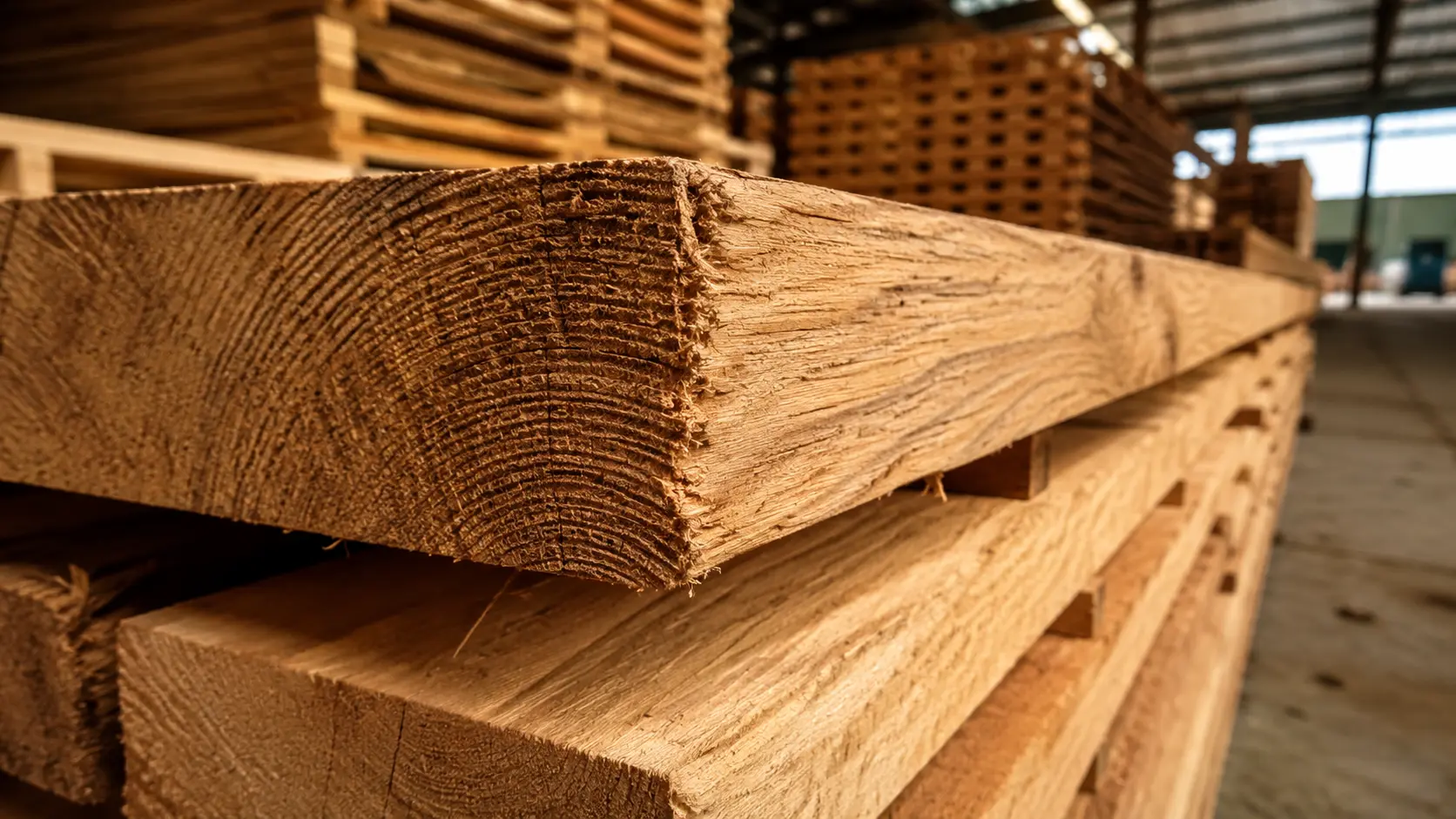
Hardwood comes from deciduous trees oak, maple, and hickory. It is strong and can carry heavy loads. It also resists wear and tear. This makes it a good choice for industrial use. The Wood Database provides density data for many wood species. This information helps buyers compare options before sourcing.
What Makes a Hardwood Right for Pallets
Three factors determine whether a wood species performs in pallet manufacturing.
Density determines how much load a board can carry without bending or splitting. High-density hardwood is one of the strongest woods used for pallets. It is popular because it can carry heavy loads.
Janka hardness measures resistance to surface denting and wear. A higher Janka rating means the wood is harder. It can better resist damage from forklifts and daily handling.
Grain structure affects nail retention and resistance to splitting during assembly and use. A tight, interlocked grain holds fasteners better and resists cracking under dynamic loads.
#1. Oak
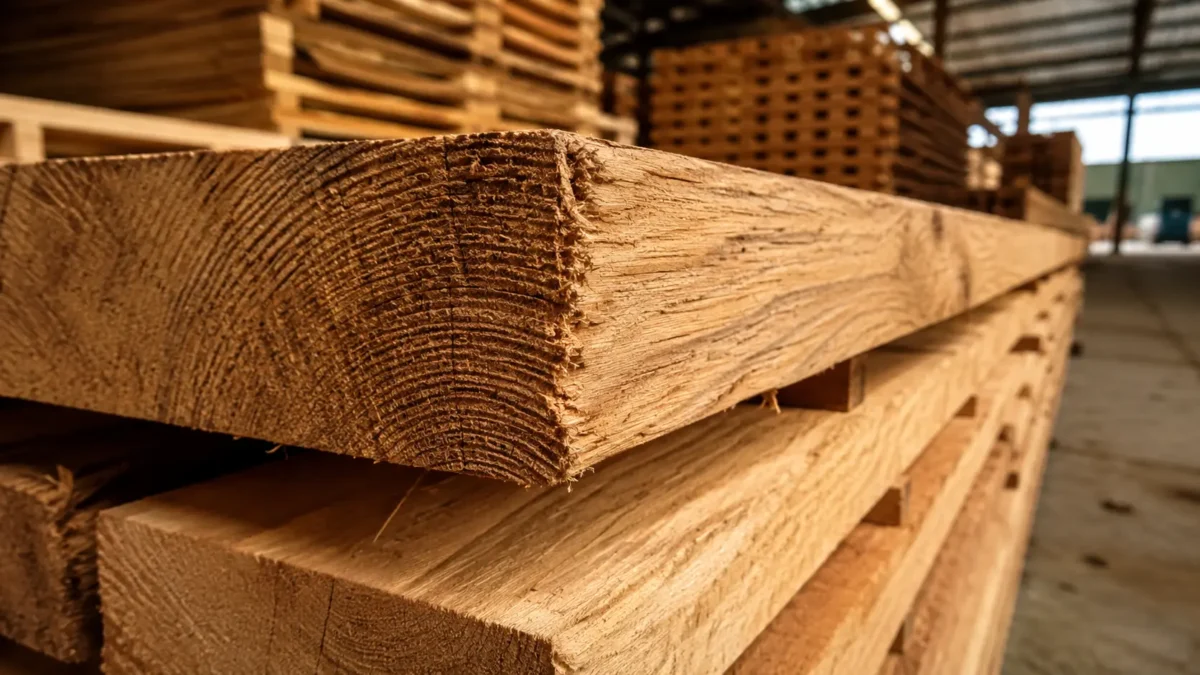
Oak is the most widely used hardwood in pallet manufacturing globally. The most common hardwood species used in pallets is oak.It is strong and durable. It handles daily wear well. It is also widely available, which helps keep costs down.
Oak is a good choice for heavy-duty pallets. It can support heavy machinery, construction materials, and industrial components. It is strong and resists moisture and wear.
EPAL allows oak for certified Euro pallets. Many pallet manufacturers also use surplus oak from the construction and furniture industries. This keeps oak competitively priced despite its strength.
Best for: Heavy industrial loads, outdoor storage, EPAL certified pallets, multi-cycle reuse.
Before accepting any oak pallet delivery, it pays to know how to inspect pallet wood quality before accepting delivery.
#2. Maple
Maple is denser and harder than oak. Maple is a strong and durable hardwood. It is slightly harder than oak and usually costs more. It is a good choice for pallets that see heavy and repeated use.
Maple has a tight grain and is very hard, so it maintains structural stability under pressure. Maple’s tight grain helps nails stay in place. Fasteners hold more securely than in many other pallet woods.
Maple is often used in food and pharmaceutical facilities. It resists damage from cleaning equipment, foot traffic, and regular pallet handling.
Best for: Heavy-duty repeated use, food and pharmaceutical environments, nail retention applications.
#3. Beech
Beech is the dominant hardwood in European pallet manufacturing. Several hardwoods are approved for EPAL-certified Euro pallets. These include ash, acacia, oak, maple, sycamore, and European chestnut. Beech is also widely used in Central Europe.
Beech has a fine, even grain and high density like oak. It machines cleanly and holds its shape well under load. The key limitation is moisture sensitivity. Beech absorbs water readily and must be kiln dried before use. Oak, maple, beech, hickory, and walnut are among the hardwoods used to make pallets. These trees produce dense, durable wood.
Properly dried beech pallets are suitable for EPAL-certified exports and European logistics operations.
Best for: EPAL certified production, European warehouse operations, enclosed dry storage.
#4.Acacia
Acacia is a popular wood for pallets in Southeast Asia and other export markets. It grows fast, tolerates heat well, and can be harvested within five years. This helps maintain a steady supply for production.
That fast growth cycle keeps acacia priced competitively. Acacia is affordable, but it is still a true hardwood. It offers good strength and performs well in tropical warehouse environments.
Most wooden pallets produced in Vietnam are made from acacia. The wood responds well to ISPM 15 heat treatment and is widely used for export shipments.
Best for: Export pallets, tropical warehouses, and high-volume operations where cost is important.
#5. Hickory
Hickory has the highest Janka hardness rating of any commonly used pallet hardwood. It is the most impact-resistant option available.
Birch, cherry, oak, maple, ash, beech, walnut, and elm are common high-density hardwoods. Hickory stands out for its toughness. It is often used for pallets that transport sensitive or high-value equipment.
The trade-off is availability and cost. Hickory is not as widely grown as oak or maple and commands a price premium. It is not commonly used for standard pallet production. However, it performs well in demanding applications.
Best for: Military and defence applications, precision equipment transport, greatest load security requirements.
Choosing the Right Hardwood for Your Operation
The right wood species varies by application. Key factors include load weight, expected reuse, storage conditions, and budget.
-
Oak for general heavy industrial use, the reliable, widely available default
-
Maple where nail retention and surface hardness matter most
-
Beech for EPAL certified production or dry European logistics
-
Acacia for Asian-origin export pallets at competitive price points
-
Hickory for greatest impact resistance in specialist applications
For export pallets, wood species can affect ISPM 15 compliance. All five hardwoods above respond well to heat treatment. For full treatment requirements by destination market, see our guide on ISPM 15 heat treatment requirements.
Source the Right Hardwood Pallet for Your Load
Choosing the right wood species helps prevent pallet failures. It can also extend pallet life and reduce shipping costs over time. Skylar Impex supplies hardwood pallets for export and heavy-duty use. Options include oak, acacia, and mixed hardwood. All pallets meet ISPM 15 requirements and include the required export markings.
The Bottom Line
Oak leads globally for good reason, availability, strength, and cost. Maple and hickory outperform it in specialist applications. Beech dominates European certified production. Acacia is the practical choice across Asian export markets.
Specify the species, not just the material. The difference shows up in load capacity, reuse cycles, and total cost over the life of the pallet.
FAQ
What is the strongest wood used in pallets?
Hickory has the highest Janka hardness rating among common pallet hardwoods. Oak and maple are popular choices for industrial pallets. They offer strong performance at a reasonable cost.
Is hardwood better than softwood for pallets?
Hardwood is strong and can carry heavy loads. It also resists wear, making it suitable for industrial use. Softwood is lighter and cheaper, better for single-use or light-load applications.
Which wood is used for EPAL pallets?
EPAL-approved hardwood species include ash, acacia, oak, maple, sycamore, and European chestnut. Beech is also widely used in Central European EPAL production.
Why is oak the most common hardwood in pallets?
Oak is used because of its strength and wide availability. Leftover oak from housing and furniture projects is commonly repurposed for pallet production. This surplus supply keeps pricing practical for industrial volumes.