
EPAL Pallets and Load Capacity: Know Your Limits
June 5, 2026ISPM 15 Pallet Requirements for China: What Exporters Must Know
June 16, 2026
ISPM 15 Pallet Requirements for Australia: What Exporters Need to Know
Australia has some of the strictest biosecurity rules in the world. If you ship goods to or from Australia on wooden pallets, compliance mistakes can be costly. Shipments get held. Pallets get destroyed. The costs fall entirely on the exporter.
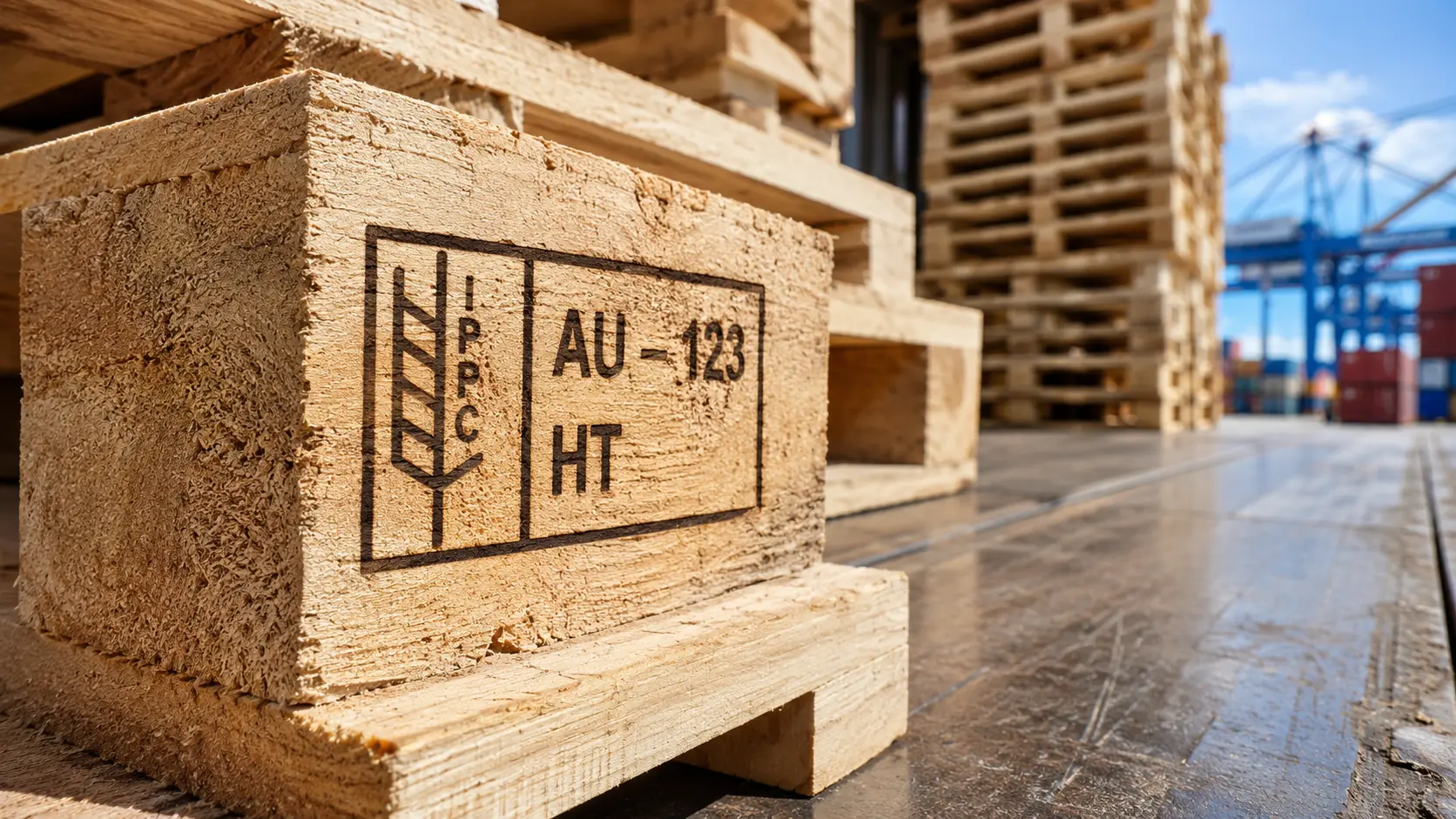
ISPM 15 requirements are included in Australia’s BICON regulations. These rules apply to wooden pallets imported on their own and to pallets used to carry goods.
The full import conditions are published on Australia’s official ISPM 15 import conditions page maintained by DAFF.
What Is ISPM 15 and Why Australia Enforces It Strictly
ISPM 15 is an international standard for wooden packaging used in global trade. It helps prevent pests from spreading between countries through pallets, crates, and dunnage.
Australia is a member of the International Plant Protection Convention (IPPC). The IPPC is an international treaty managed by the FAO. WTO members use ISPMs as the basis for their plant health rules.
Australia’s isolation has preserved ecosystems found nowhere else. DAFF enforces biosecurity at every port. Non-compliant wood packaging gets treated, exported, or destroyed on arrival. There is no flexibility.
Which Pallets Need ISPM 15 Treatment
ISPM 15 applies to most types of raw wood packaging. This includes pallets, crates, drums, packing blocks, load boards, pallet collars, and dunnage.
Not everything made of wood requires treatment. Australia exempts the following:
-
Wood packaging made entirely from thin wood 6mm or less in thickness
-
Engineered wood products like plywood, MDF, particleboard, and OSB. These materials are made using glue, heat, or pressure.
-
Plastic, metal, and composite pallets
If your pallet is solid timber and thicker than 6mm, it needs treatment — no exceptions.
Approved Treatment Methods
Two treatment methods are accepted under ISPM 15.
Heat treatment (HT) is the standard. The wood must be heated to at least 56°C at its core. This temperature must be maintained for a least of 30 continuous minutes. This eliminates pests and pathogens without chemicals. Heat-treated pallets are safer for food and pharmaceutical products. They are also more durable because they contain less moisture.
Methyl bromide fumigation (MB) is the second option. MB treatment works well against pests. However, it is being replaced because of environmental and health risks. In Australia, industries are gradually switching to heat treatment.
For export-focused operations, HT is the recommended choice. Most trading partners now need it.
How to Read the IPPC Stamp
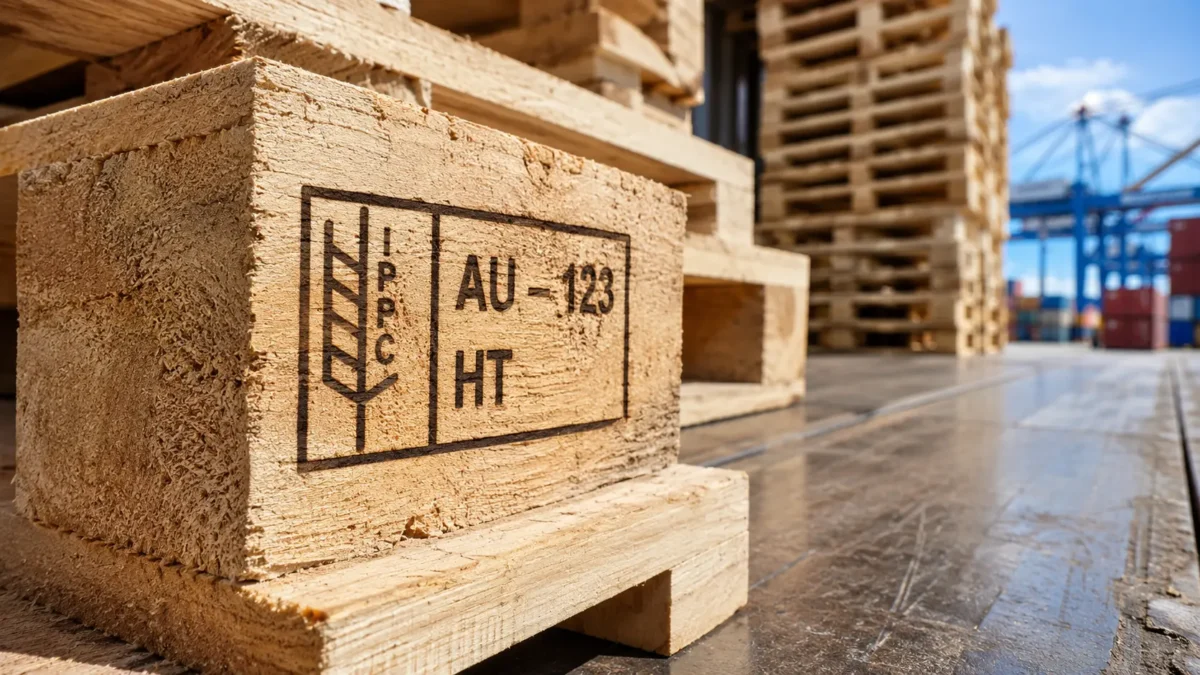
Every compliant pallet must carry the IPPC certification mark. The stamp must show the IPPC symbol, the two-letter country code, and the treatment method.. For Australian-origin pallets, the country code is AU.
The stamp also shows a unique certification number. AQIS issues this number to the treatment provider or pallet manufacturer.
The mark must appear on at least two opposite sides of the pallet. It must be clearly legible — burned or branded into the wood, not printed in ink. A missing, faded, or incomplete stamp can lead to rejection. This can happen even if the pallet was treated correctly.
Check the stamp carefully. It can help you identify non-compliant pallets supplied from overseas. The same principles apply when you need to know how to spot fake EPAL pallets coming into your warehouse.
The AWPCS — Australia’s Certification Scheme
In Australia, not every business can apply the IPPC mark. Only AWPCS-certified companies can make ISPM 15-compliant wood packaging. AQIS created the AWPCS. It approves treatment providers and manufacturers that meet ISPM 15 requirements.
Manufacturers and treatment facilities must follow strict rules. They are also inspected regularly by authorised auditors.
Before purchasing pallets for export, verify your supplier holds current AWPCS certification. An uncertified supplier cannot legally use the IPPC stamp. This can put your shipment at risk. Review the questions to ask before buying export pallets for a full supplier qualification checklist.
What Happens If Pallets Fail Inspection
Non-compliance at an Australian port is not a minor issue. Countries that follow ISPM 15 need proper marking on wood packaging. If the mark is missing or pests are found, the shipment may be treated, disposed of, or denied entry.
Non-compliant shipments can be expensive. Fumigation on arrival may cost more than $450 per container, plus storage fees. If the container must be unpacked, delays of 7 to 14 days are common. The exporter usually pays for labour, disposal, and rework.
These costs sit entirely with the shipper. There is no appeals process once a biosecurity order is issued.
Source Pallets That Are Already Compliant
Certified pallets make exporting to Australia easier. They help reduce the risk of biosecurity issues. Skylar Impex supplies export-ready pallets with valid IPPC markings and heat treatment certification.
The Bottom Line
ISPM 15 compliance for Australia is not optional. Solid wood pallets must be heat treated. They also need a valid IPPC stamp and must come from an AWPCS-certified supplier. Get any one of these wrong and the shipment stops at the port.
Check that your treatment provider is approved. Inspect every stamp before loading. Keep all documents with the shipment. That is the short version of everything DAFF requires.
FAQ
What pallets are exempt from ISPM 15 in Australia?
Plastic, metal, and composite pallets are fully exempt. Processed wood products like plywood, MDF, and particleboard are also exempt. Only solid timber pallets thicker than 6mm need treatment.
Does ISPM 15 certification expire?
ISPM 15 certification does not expire. It remains valid as long as the pallet is undamaged and the IPPC stamp is clearly visible. If the pallet is repaired with new solid wood parts, it must be treated and stamped again.
Can I reuse ISPM 15-certified pallets for export?
Reusing ISPM 15-marked pallets is allowed. Before exporting, check that the pallet complies with the importing country’s regulations.
Does ISPM 15 apply to plastic pallets?
No. Plastic, metal, and composite pallets do not need ISPM 15 treatment. They are not considered a biosecurity risk.