
Pallets for E-commerce Warehouses
July 20, 2026
How Pallet Recycling Saves Money for Businesses
August 4, 2026
The Role of EPAL in Pallet Reuse
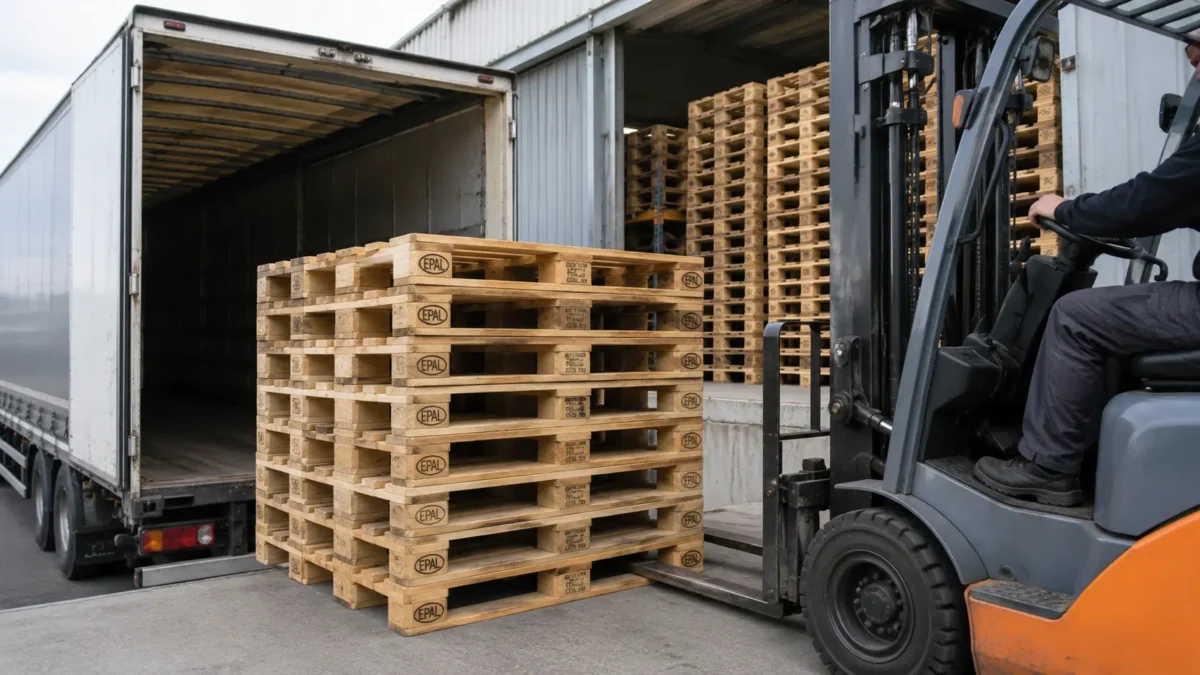
Most pallets get used once and thrown away. EPAL pallets work differently. They’re built to move through the supply chain again and again.
That difference isn’t an accident. It’s a whole system designed around reuse, repair, and exchange.
 EPAL runs the world’s largest open pallet exchange pool. Over 650 million pallets move through it today. Understanding how that system works helps you see why EPAL costs more upfront but saves money over time.
What Makes a Pallet Part of the EPAL System
An EPAL pallet isn’t just a wooden platform with a stamp on it. It’s part of a controlled network.
Only licensed manufacturers can produce genuine EPAL pallets. Only licensed repairers can fix them. Every step follows fixed rules on wood quality, nail patterns, and board thickness.
This control is what makes reuse possible. If every EPAL pallet is built the same way, any warehouse in the network can trust any other pallet in the network. That trust is the entire point.
How the Exchange Pool Actually Works
Here’s the simple version. A truck delivers goods on EPAL pallets. Instead of keeping those pallets, the receiving warehouse hands back empty EPAL pallets in exchange.
The delivery truck leaves with pallets just as good as the ones it brought. No pallet sits idle. No one pays to ship empty wood back and forth.
This exchange system only works because every pallet meets the same standard. A warehouse in Germany can hand over pallets to a truck heading to Poland, and both sides trust the swap without inspecting every board.
Repair Keeps Pallets in Circulation Longer
Pallets take damage. Boards crack. Blocks loosen. In a one-way system, that pallet gets scrapped.
In the EPAL system, damaged pallets go to licensed repair centers instead. Repairers follow strict rules on which boards can be replaced and how the repair gets marked.
Once repaired, the pallet is graded “as new.” It goes right back into the pool, carrying the same load it did on day one. Our breakdown of the reuse and repair benefits of EPAL pallets covers this in more depth, including how many cycles a well-maintained pallet can survive.
Why Fake Pallets Threaten the Whole System
Not every pallet with an EPAL-style stamp is the real thing. Counterfeit pallets copy the look without following the rules behind it.
This matters more in a reuse system than a one-way system. A fake pallet in the exchange pool can fail under load, skip proper heat treatment, or simply not match the dimensions the system depends on.
If you’re sourcing pallets for export or exchange, learn how to verify a pallet is genuinely EPAL certified before you accept a shipment. One fake pallet can cause problems for everyone downstream in the pool.
What Happens When a Pallet Reaches the End of Its Life
Eventually, repair isn’t worth it anymore. At that point, EPAL pallets get recycled rather than dumped.
The wood gets broken down and reused, often for particleboard, packaging, or biomass. Almost nothing from the pallet goes to waste. This closes the loop on the entire system, from new production through years of reuse to final recycling.
Why This Matters for Exporters and Warehouses
Reuse changes the cost math. A pallet that survives ten or more shipping cycles costs less per trip than one used once and thrown away.
It also changes environmental impact. Wood stores carbon. Keeping a pallet in circulation longer means that carbon stays locked up longer too, instead of being released when the wood gets discarded early.
For businesses shipping to Europe, working within the EPAL system also means smoother handling. Warehouses across the continent already trust the standard. Your pallets move without extra inspection or explanation.
Getting the Most Out of EPAL Reuse
Ask your supplier if their pallets are genuinely licensed, not just styled to look like EPAL. Check for the stamp, the license number, and the heat treatment mark before accepting a shipment.
If you’re setting up a regular export lane to Europe, factor pallet reuse into your cost planning from the start. Fewer replacements and lower per-trip costs add up fast at scale.
Conclusion
EPAL isn’t just a pallet size or a stamp. It’s a reuse system built on strict manufacturing rules, controlled repair, and an exchange network that spans dozens of countries.
That system is what lets a single pallet move through years of shipping cycles instead of one trip to the landfill.
Need pallets built to genuine EPAL standard, ready for exchange and reuse? Get certified EPAL pallets built for long-term circulation.