
The Lifecycle of a Wooden Pallet
September 28, 2026

Top 10 Questions to Ask Before Buying Pallets for Your Business
A pallet looks simple. But a bad pallet order can stall a shipment, damage your goods, and cost you twice.
The best defense is a good list of questions to ask before buying pallets. The industry’s Uniform Standard for Wood Pallets gives buyers and makers one set of terms.
 It covers how a pallet is built and how it must perform. Use it as common ground with any supplier.
Here are ten questions to ask before you place an order.
1. What Size and Type of Pallet Do I Need?
Start with your load. Measure its length, width, and weight. Then match it to a standard footprint like GMA 48 x 40 inches or EPAL 1200 x 800 mm.
Chemical loads often need a CP type. A box load and a drum load need different decks. Ask your supplier to confirm the fit before they cut a single board.
A pallet that’s a few centimeters off can jam a rack or a conveyor.
2. How Much Weight Must It Carry?
Ask for the load rating. Static load is weight at rest, like a pallet on a rack. Dynamic load is weight in motion, like a pallet on a forklift.
Tell your supplier how you’ll use the pallet. A pallet that’s fine on a flat floor can sag when it sits across two rack beams. A rating for one use doesn’t cover the other.
3. Which Wood Will You Use, and Why?
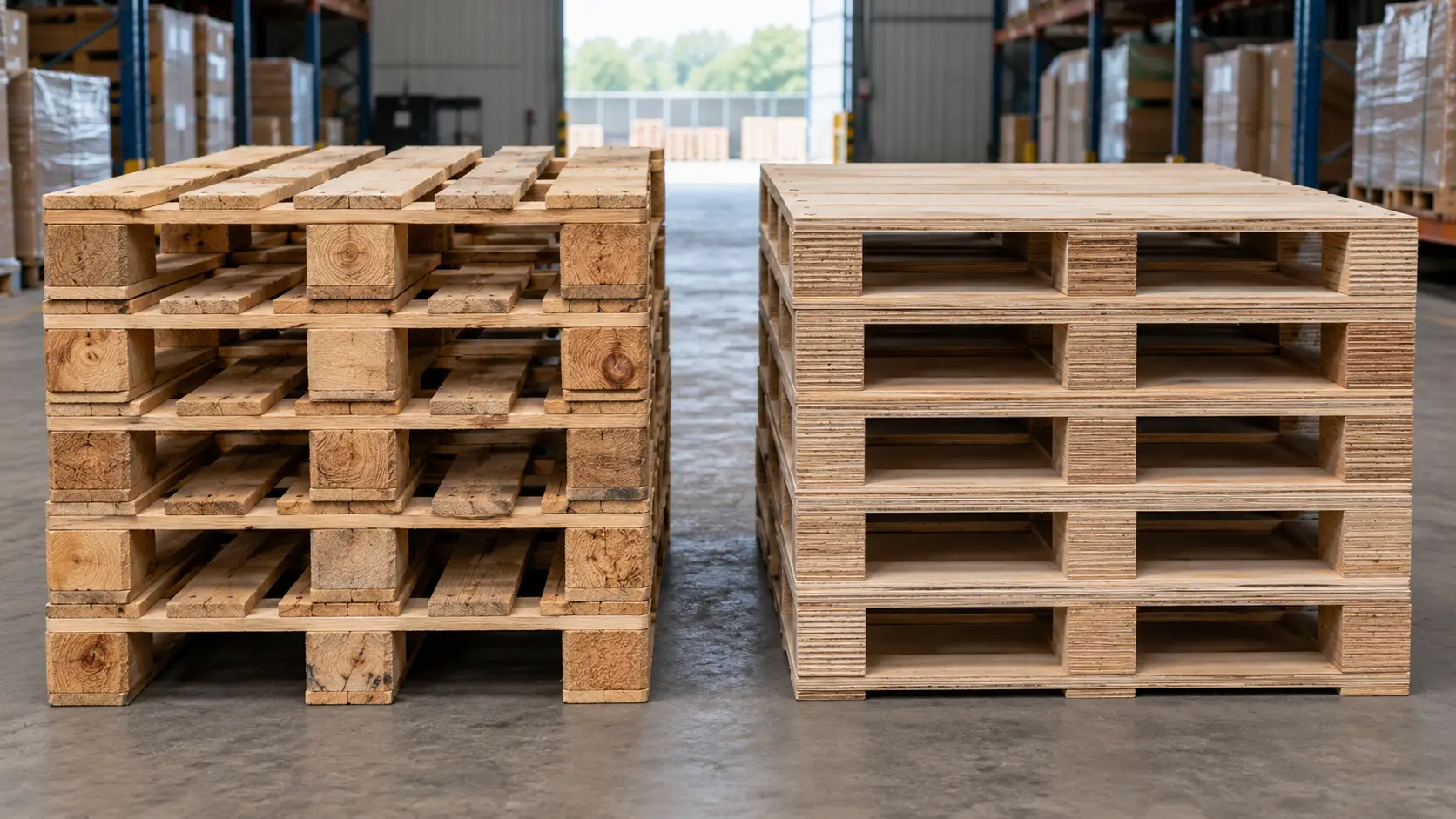
Softwood costs less and weighs less. Hardwood handles heavy loads and repeat trips better.
Ask which one fits your cargo and your shipping cycle. Our guide on hardwood vs softwood pallets explains the trade-offs. A good supplier will give you a reason, not just a price.
4. How Dry Is the Wood?
Wet wood warps, grows mold, and adds weight. Pallets packed in a sealed container for a long sea trip are most at risk.
Ask what moisture level the supplier dries to. Lumber at 19% or lower counts as dry. Then ask for a moisture reading at delivery, not just a promise.
5. Does It Meet ISPM 15 for Export?
If pallets cross a border, they need heat treatment and an IPPC stamp. Heat treatment means the core of the wood reaches 56°C for 30 minutes.
Some markets also ask for a heat treatment certificate. Rules differ by country, so tell your supplier where the cargo is going. A missing stamp can hold a container at the port.
6. Is It New, Repaired, or Used?
Repaired and used pallets cost less. But quality varies a lot from lot to lot.
Ask how the supplier grades them. Ask if they replace weak boards or just resell them as they are. A used pallet can carry stains, odors, or old damage, so ask where the lot came from.
Never accept a mixed lot without a sample check.
7. Is It a Genuine EPAL Pallet, or Just EPAL-Style?
A pallet can copy the EPAL size and look without following the EPAL system. Ask for the license number and a clear photo of the stamp.
For CP and GMA types, ask for a written spec with exact dimensions. If you plan to buy EPAL, read our list of questions to ask before buying EPAL pallets first.
8. How Do You Check Quality?
Ask how the supplier inspects pallets before dispatch. Look for checks on dimensions, nail pattern, and board condition.
Ask for a sample batch before a large order. Agree up front on who inspects it and how long you have to raise a claim. Then check a few pallets from each batch when it arrives.
9. Can You Deliver On Time and at My Volume?
Ask about stock, production capacity, and lead time. If your container cut-off is Friday, a Monday delivery means a missed sailing.
Also ask what happens if a batch runs late or arrives damaged. Get the delivery schedule in writing. A clear answer now saves a long argument later.
10. What Is the Total Cost Per Trip?
The price per pallet isn’t the full cost. Add freight, treatment, repairs, and the number of trips the pallet will make.
Take an example. A Rs 600 pallet that lasts 5 trips costs Rs 120 per trip. A Rs 900 pallet that lasts 15 trips costs Rs 60 per trip.
Ask for a delivered price with freight included, then do this math for every quote. Also ask about repair. A pallet you can repair costs less over time than one you must replace.
Put These Questions to Work
Write the answers down before you compare quotes. Put each supplier’s replies side by side. The clear, specific answers come from the supplier you can trust.
Share the list with your warehouse and buying teams so everyone asks the same things. A good supplier won’t mind the questions. They’ll welcome them, because they know their pallets will hold up.
Conclusion
Buying pallets isn’t just about price. Size, wood, moisture, treatment, and quality all decide how your pallets perform.
Keep these questions handy before every pallet order. They can help you avoid surprises.. Want a supplier who answers them well? Talk to us about our wooden pallets, built with ISPM 15 treatment for export orders.