
Top 10 Questions to Ask Before Buying Pallets
October 5, 2026
How to Identify an ISPM 15-Compliant Pallet
October 19, 2026

The Evolution of Pallets in Modern Supply Chains
The pallet looks like the simplest thing in a warehouse. Yet it took decades of trial, war, and rule-making to get here.

The story of the evolution of pallets in modern supply chains is a story of standards. ISO 6780 defines the main sizes and tolerances for flat pallets used in international transport. It covers pallets made of any material.
Here’s how we got from mixed-size platforms to a global system.
From Hand Loading to Forklifts
Industrial trucks took shape near the end of World War I. They could lift loads. But early pallets came in all sizes, and many trucks couldn’t handle them.
By the late 1930s, engineers fixed this by standardizing pallet sizes. Fork length and spacing then followed the same pattern. The forklift and the pallet grew up together.
How War Made the Pallet Standard
World War II demanded speed. The military had to load ships and cargo planes fast. Palletized loads and forklifts were the answer.
Standard sizes helped because planners knew the exact size of every pallet.
Four-way entry designs spread in this era. Forks could now enter from any side. That saved time at every dock.
Peacetime Growth and the First Pools
After the war, pallets moved into civilian warehouses and factories. Dedicated pallet makers appeared. So did early repair and reuse practices.
Pooling began in 1946, when the Australian government set up CHEP. The shared pool grew from wooden pallets the US Army left behind.
The idea was simple. Share good pallets instead of buying and scrapping them.
A Common Language for Size
As trade went global, size mattered more. Regions used different pallets, and ports needed one shared reference.
Without one, a pallet that fit in one port might not fit in the next. ISO 6780 became that reference.
The first edition came out in 1988. The current edition dates from 2003, and ISO last confirmed it in 2020.
Regional norms still exist. North America uses the 48 x 40 inch GMA pallet. Europe uses the 1200 x 800 mm Euro pallet.
Pests, Borders, and ISPM 15
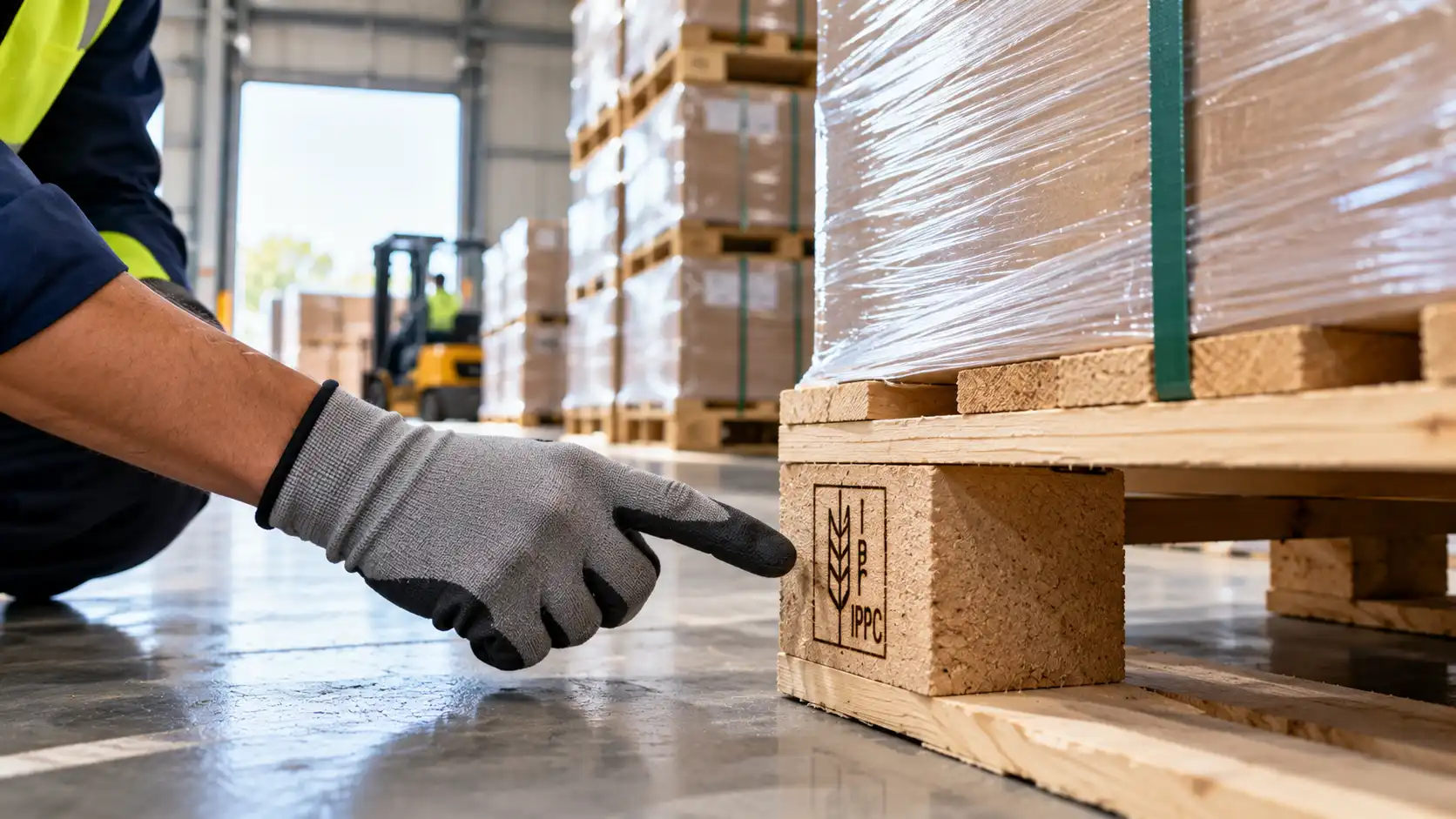
Wood travels with cargo, and pests can travel with wood. In March 2002, the International Plant Protection Convention adopted ISPM 15. It was created to reduce this risk.
The 2009 revision required debarked wood. Its governing body revised the annexes in 2013 and 2018.
Heat treatment has largely replaced methyl bromide fumigation. Our guide on heat treatment vs chemical fumigation explains why. The EU has banned methyl bromide for this use since 2010.
Pools Meet the Circular Economy
Pooling grew up in Europe too. The EPAL pool now holds more than 650 million pallets.
Licensed makers and repairers in more than 35 countries keep them in circulation. EPAL has also added chemical (CP) pallets to its technical rules.
Reuse, exchange, repair, and recycling make the system circular. A pool also keeps wood in use longer, which delays the cost of making new pallets. Our look at how EPAL standards support sustainable logistics shows how each step cuts waste.
Smarter Pallets and Automation
Modern warehouses run on conveyors, racks, and robots. All them expect fixed pallet dimensions and clean entry points. A warped board can stop a line.
Some operations now add barcodes or RFID tags to pallets. That shows where each pallet is and how it moves.
The pallet is no longer just a platform. It’s a data point.
What This Means for Buyers
History offers one clear lesson. Standards save money.
Pick a size your handling gear expects. Check the treatment and marks for every export lane.
Ask if your pallets can join a reuse or repair system. Ask your supplier to confirm each point in writing.
Frequently Asked Questions
When did pallets become a standard part of logistics?
Engineers standardized pallet sizes in the late 1930s. World War II made pallet handling common in military supply. After the war, civilian warehouses also began using pallets.
What does ISO 6780 cover?
ISO 6780 defines the main sizes and tolerances for flat pallets used in international transport. It covers single-deck and double-deck pallets of any entry type and any material.
Why did ISPM 15 start?
ISPM 15 helps stop pests from spreading through wood packaging used in global trade. The International Plant Protection Convention adopted it in March 2002. It was revised in 2009.
What is pallet pooling?
A pool shares standard pallets among many users. They exchange or return pallets instead of scrapping them. The EPAL pool is one example, with more than 650 million pallets.
Are wooden pallets still used in modern supply chains?
Yes. Wood remains vital to major systems like the EPAL pool, which has over 650 million pallets. Standards such as ISO 6780 also cover pallets made of other materials.
Conclusion
Pallets have changed over time. Modern supply chains now use shared standards instead of mixed sizes. Wartime need, global trade, pest rules, and pooling each shaped the pallet you buy today.
That history explains why size, treatment, and reuse matter now. Want pallets built for that world? Talk to us about our wooden pallets, made to standard sizes with ISPM 15 treatment for export.