
Pallets for Pharmaceuticals and Cold Chain Transport: A Practical Guide
April 13, 2026
Why Hardwood Pallets Last Longer in Harsh Environments
April 27, 2026

ISPM 15 Pallet Requirements USA: Complete Compliance Guide
Shipping internationally with wooden pallets looks simple. Until your shipment gets stopped at port.
A missing stamp or untreated pallet can delay your cargo. It can also increase costs and damage your reputation. According to the official ISPM 15 wood packaging material import requirements by USDA APHIS. Wood packaging must meet strict rules.
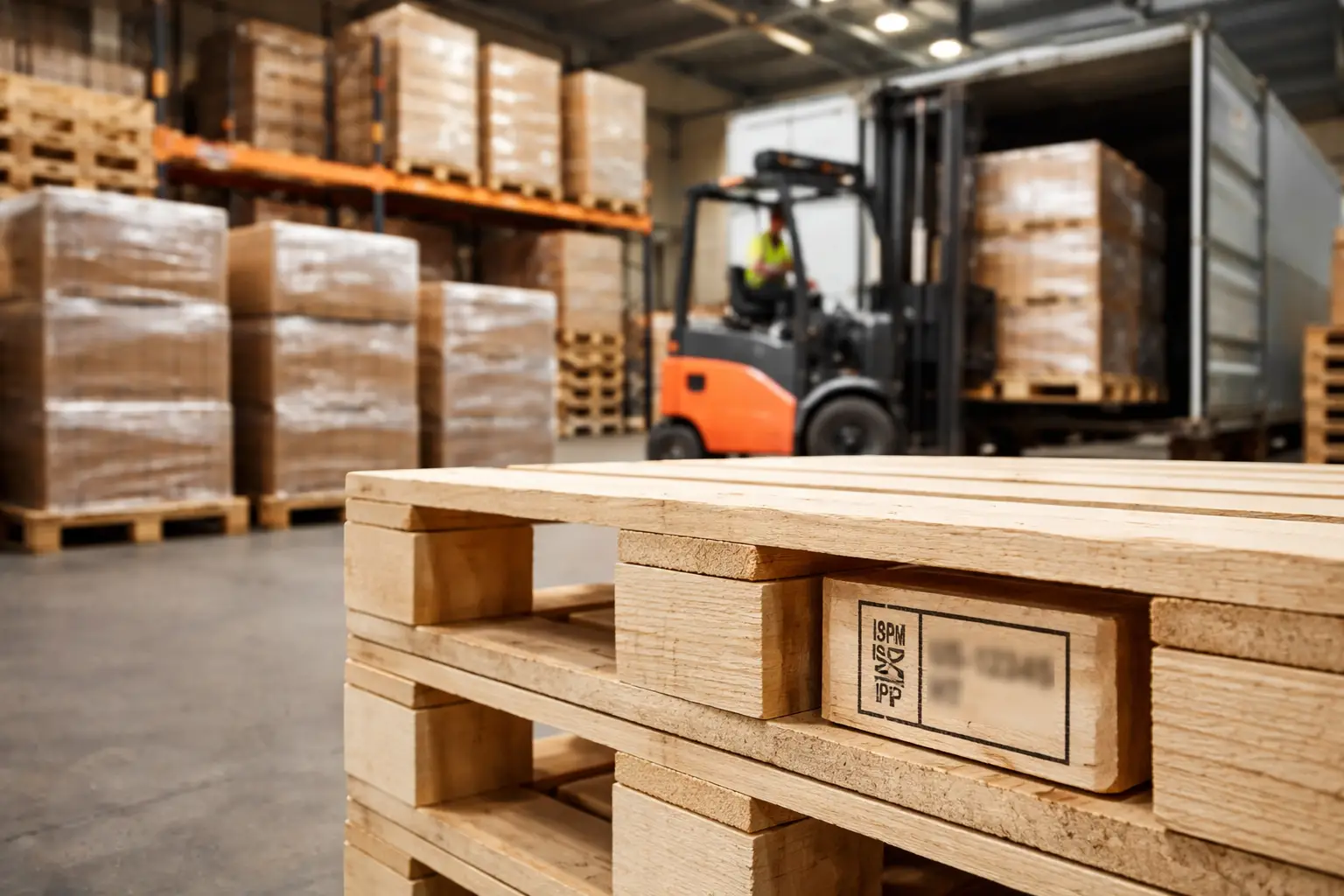 It must be treated. It must have a proper mark. It must be free from pests before entering the USA.
For warehouse teams and exporters, this is not optional. It is a basic compliance requirement.
This guide explains ISPM 15 pallet requirements in the USA in a simple way.
What is ISPM 15 and Why It Matters for USA Shipments
ISPM 15 is an international standard. It controls how wood packaging material is treated before export.
The goal is simple. Prevent pests from spreading across countries.
It applies to:
-
Wooden pallets
-
Crates
-
Boxes
-
Dunnage
If untreated wood carries insects, it can damage agriculture in the destination country. That is why customs authorities take this seriously.
For logistics teams, ISPM 15 is directly linked to shipment clearance.
When ISPM 15 Pallet Requirements Apply in the USA
This is where confusion usually starts.
The requirement depends on the shipment type:
-
Import into USA: Always required
-
Export from USA: Depends on destination country
-
Domestic shipping: Not required
Example: A company exporting goods from India to the USA must use ISPM 15 pallets. But a shipment moving within California does not need it.
Another example: A US exporter shipping to Germany must follow ISPM 15. But shipping to a country with relaxed enforcement may still carry risk if rules change.
Always confirm before dispatch.
ISPM 15 Pallet Requirements for Wood Packaging
To meet ISPM 15 standards, pallets must follow strict rules:
-
Wood thickness must be more than 6 mm
-
Bark must be removed
-
Pallets must be treated
-
Each pallet must have a valid IPPC mark
Many teams assume treatment alone is enough. It is not.
The marking is critical. Without it, customs will treat the pallet as non-compliant.
Warehouse example: The pallets were heat treated. But they were not stamped properly.
The shipment got delayed. The entire container was held.
ISPM 15 Treatment Methods Explained (HT vs MB)
There are two approved treatment methods:
-
Heat Treatment (HT): Wood is heated to kill pests
-
Methyl Bromide (MB): Chemical fumigation
Heat treatment is the most widely used method today. It is safer and more accepted globally.
Fumigation is still used in some cases. But certain countries have restrictions.
If your team is comparing options, this guide can help.
It explains ISPM 15 heat treatment and fumigation methods in a simple way.
Practical scenario: A procurement team chose cheaper fumigated pallets. The destination country rejected them due to chemical restrictions. The shipment had to be repacked.
Understanding the ISPM 15 Mark (IPPC Stamp Breakdown)
The IPPC mark proves compliance.
It includes:
-
IPPC symbol
-
Country code
-
Treatment provider number
-
Treatment type (HT or MB)
This mark must be:
-
Clear
-
Permanent
-
Visible on at least two sides
Warehouse tip: Train your loading team to check stamps before dispatch. This small step can prevent large issues.
Exporting from the USA? Country-Specific ISPM 15 Rules
Export rules are not the same for every country.
Some countries are strict. Others are moderate. But you should never assume.
For example:
-
Australia has strict inspections
-
New Zealand enforces heavily
-
Europe follows consistent checks
Even if enforcement seems relaxed, random inspections still happen.
Before shipping, check destination requirements. This guide on ISPM 15 requirements for different export countries can help your team plan better.
Common ISPM 15 Compliance Mistakes to Avoid
Most problems come from small mistakes:
-
Missing or unclear stamps
-
Mixing compliant and non-compliant pallets
-
Using damaged pallets
-
Using untreated dunnage
Real example: A container was stopped because one pallet had a faded stamp. The entire shipment was delayed.
Consistency is key. One weak point affects the whole load.
What Happens If Your Shipment Fails ISPM 15 Compliance
The impact is immediate:
-
Shipment can be rejected
-
Goods may be destroyed or returned
-
You may face storage charges
-
Delivery timelines get affected
There is also a hidden cost. Loss of trust.
Clients expect smooth delivery. Delays reduce confidence.
ISPM 15 Compliance Checklist for Warehouse & Logistics Teams
Use this simple checklist before every shipment:
-
Are all pallets treated?
-
Are IPPC marks visible and clear?
-
Is the wood debarked?
-
Are all pallets consistent?
-
Is supplier certification available?
Add this as a standard SOP. It saves time and avoids last-minute issues.
FAQs on ISPM 15 Pallet Requirements USA
Are plastic pallets exempt?
Yes. ISPM 15 applies only to wood.
Can ISPM 15 pallets be reused?
Yes, if they are not modified and the mark is visible.
Is ISPM 15 required for domestic shipping?
No. It applies only to international shipments.
Can painted pallets hide the stamp?
Yes. Avoid covering the mark with paint or labels.
A Practical Way to Reduce Compliance Risk
If your warehouse handles exports regularly, pallet quality becomes critical.
Using mixed or uncertified pallets increases inspection time. It also increases risk.
Using ISPM 15 compliant wooden pallets for export shipments helps standardize your process. Your team spends less time checking each pallet.
It also reduces errors during loading.
Conclusion: Simplifying ISPM 15 Compliance for Your Shipments
ISPM 15 is a basic requirement. But small gaps can cause big problems.
Most delays happen due to simple mistakes. Missing stamps. Wrong pallets. Poor checks.
The solution is practical:
-
Use certified pallets
-
Train your team
-
Follow a checklist
If you export regularly, switch to ISPM 15 compliant wooden pallets.
It helps you avoid delays. It reduces risk. It keeps your shipments moving smoothly.
Simple process. Better control. Faster clearance.