
How Moisture Content Affects Pallet Strength
July 13, 2026
The Role of EPAL in Pallet Reuse
July 27, 2026
Pallets for E-commerce Warehouses
E-commerce runs on speed. Every order needs to move fast, from receiving to picking to dispatch. The pallet under your inventory plays a bigger role in that speed than most people think.
Pick the wrong pallet, and your warehouse slows down. Racking doesn’t fit right. Forklifts struggle. Automated systems reject the load.
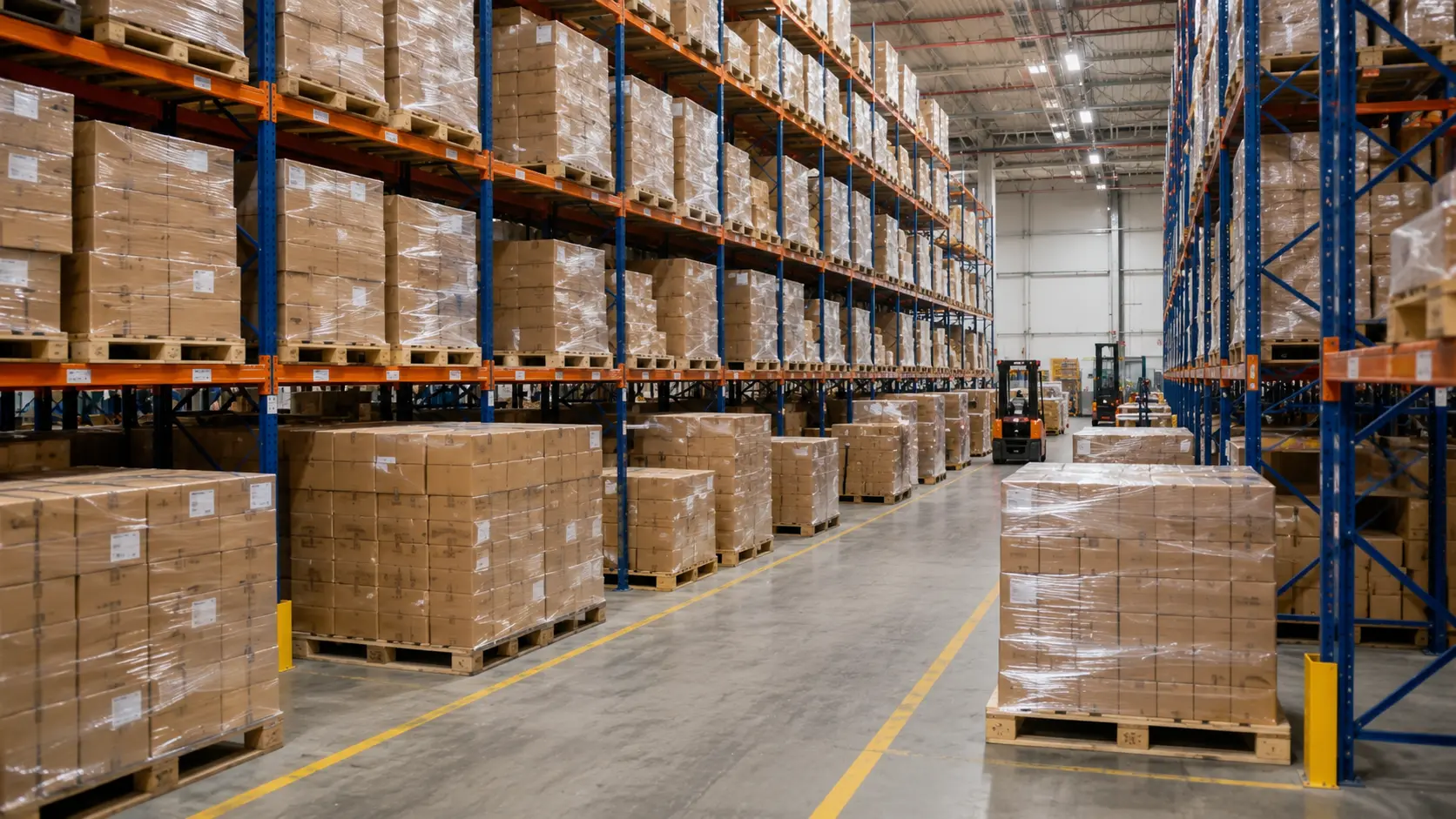 The international standard for pallet dimensions exists for a reason. Warehouses, carriers, and equipment makers all build around a common size. Ignore that standard, and everything downstream gets harder.
Why Pallet Size Matters So Much
Most e-commerce warehouses in the US and increasingly in India build their systems around one size. It’s called the GMA pallet. It measures 48 inches by 40 inches.
This size isn’t random. It fits standard trailers, racking systems, and conveyor lines. Forklifts and pallet jacks expect it. Automated storage systems are built around it too.
Check our full breakdown of GMA pallet specifications if you’re setting up or scaling a fulfillment operation. Getting this one detail right saves you from repacking headaches later.
What Happens When Pallets Don’t Match Warehouse Standards
Mismatched pallets cause real problems. Here’s what goes wrong when sizing is off:
-
Racking gaps. Non-standard pallets don’t sit flush in racking bays.
-
Conveyor jams. Automated lines expect a fixed footprint. Odd sizes cause stops.
-
Manual handling. Staff end up repacking goods onto the right pallet size.
-
Rejected shipments. Some fulfillment centers, including Amazon FBA, reject non-compliant pallets outright.
-
Slower throughput. Every exception eats into your picking and packing time.
None of these problems are small. They add up fast during peak season, when speed matters most.
Choosing the Right Pallet Material
Wood remains the most common choice for e-commerce warehouses. It’s strong, affordable, and easy to source in bulk.
Plastic pallets work well in hygiene-sensitive operations. But for general e-commerce storage and shipping, wood still wins on cost and availability.
Within wood, you also need to pick a wood type. Our guide on choosing between hardwood and softwood breaks down which type fits your load weight and shipping cycle. Heavier SKUs often need hardwood. Lighter, high-turnover goods do fine on softwood.
Load Capacity and Racking Compatibility
E-commerce inventory varies a lot. Some SKUs are light and bulky. Others are dense and heavy.
A standard wood pallet typically holds 2,000 to 2,500 lbs dynamically, with some rated higher depending on build quality. Static racking loads can go even higher.
Before you commit to a pallet supplier, check your racking system’s load rating too. A strong pallet on a weak rack still creates a safety risk. Match both specs, not just one.
Domestic vs Export Considerations
Not every pallet needs export treatment. If your goods stay within India, ISPM 15 heat treatment usually isn’t required.
But if any part of your fulfillment chain touches international shipping, even occasionally, treated pallets save you from last-minute compliance scrambles. It’s worth asking your supplier to build in that flexibility from day one.
Automation and Four-Way Access
Modern fulfillment centers lean heavily on automation. Conveyor belts, robotic pickers, and automated storage systems all expect consistent pallet dimensions and clean four-way forklift access.
A pallet with warped boards or inconsistent nailing can jam a conveyor line in seconds. Quality control at the manufacturing stage matters just as much as size compliance.
Getting Your Pallet Strategy Right
Start with your racking and automation specs. Match your pallet size to those systems first, not the other way around.
Then pick your wood type based on load weight and turnover speed. Heavier, slower-moving inventory can handle hardwood’s extra cost. Lighter, fast-moving SKUs often do just fine on softwood.
Finally, build in some flexibility for export-ready treatment, even if most of your volume stays domestic. It’s cheaper to plan for this early than to retrofit later.
Conclusion
Pallets aren’t just a platform under your inventory. They’re part of your warehouse’s operating system.
Get the size and material right, and your fulfillment runs smoother, your automation works as designed, and your peak-season volume doesn’t grind to a halt.
Need pallets built to the exact spec your warehouse runs on? Get properly sized wooden pallets built for e-commerce speed and consistency.