
Pros and Cons of Softwood Pallets for Export
July 6, 2026
Pallets for E-commerce Warehouses
July 20, 2026
How Moisture Content Affects Pallet Strength
Wood is not a fixed material. It changes as it dries or absorbs water. That change has a direct effect on how much weight your pallet can carry.
Most buyers focus on wood species or board thickness. Few think about moisture content. But moisture content decides how strong that wood really is.
 The USDA Forest Products Laboratory explains how wood strength changes as it dries. Their research shows wood gains strength as moisture drops, up to a point. Get this wrong, and your pallets fail under load.
What Is Moisture Content in Wood?
Moisture content is the amount of water inside the wood. It’s measured as a percentage of the wood’s dry weight.
Freshly cut wood can hold a lot of water. Some green wood exceeds 100% moisture content. Dried wood settles much lower, often between 12% and 20%.
Wood is hygroscopic. That means it absorbs or releases moisture based on the air around it. It never fully stops reacting to humidity. Even after drying, wood keeps adjusting to the climate it sits in.
This is why two pallets from the same batch can behave differently. One stored in a dry warehouse. One stored near a loading dock in humid air. Same wood, different moisture, different performance.
Why Moisture Content Changes Pallet Strength
Here’s the part most buyers miss. Below a certain moisture level, called the fiber saturation point, wood starts to shrink. As it shrinks, it also gets stronger and stiffer.
This happens because water inside the wood cell walls affects how those walls hold together. Less water means tighter, stronger cell structure. Think of it like a sponge. Full of water, it’s soft and loose. Squeeze the water out, and the fibers pack closer together.
But there’s a limit. Wood that’s too dry can turn brittle. It cracks under stress instead of flexing. The right range matters more than “as dry as possible.” Pallet makers aim for a target zone, not the lowest number possible.
The Problems Wet Pallets Cause
Wet pallets create real risks for your supply chain. Here’s what can go wrong:
-
Lower load capacity. Wet wood is softer and bends more under weight.
-
Mold growth. High moisture invites mold, especially in sealed containers.
-
Warping and cracking. As wet wood dries unevenly, it twists or splits.
-
Weight penalties. Wet pallets weigh more, raising your freight cost.
-
Pest risk. Damp wood attracts insects more easily than dry wood.
Any one of these can delay a shipment or damage your product. Combine two or three, and a single pallet failure can hold up an entire container at customs.
Kiln Drying and ISPM 15 Compliance
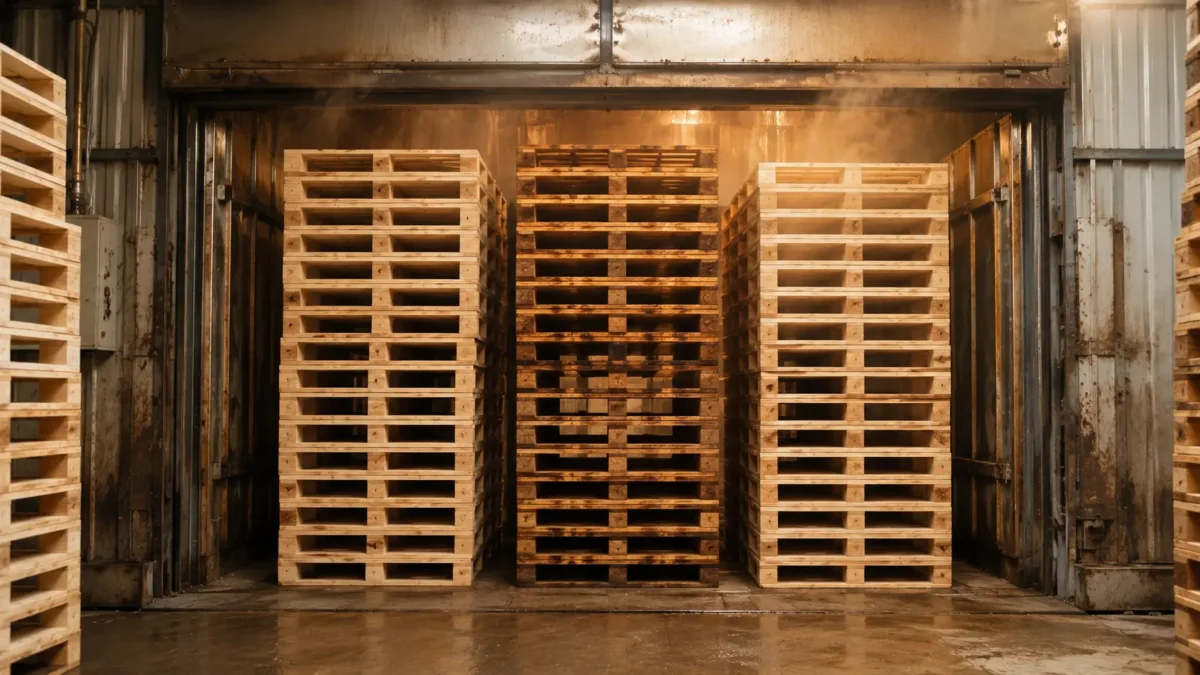
Kiln drying reduces moisture content in a controlled way. Heat and airflow pull water out slowly. This avoids the cracking that fast drying can cause.
This process often overlaps with export treatment. The heat treatment process required for ISPM 15 also reduces moisture as it kills pests. Two problems solved at once.
Kiln-dried pallets typically land in the 12% to 19% moisture range. That’s the sweet spot for strength, weight, and shipping stability. Ask your supplier to confirm this range before you place a bulk order.
Hardwood vs Softwood: Different Moisture Behavior
Not all wood dries the same way. Softwood and hardwood absorb and release moisture at different rates.
Our full breakdown on hardwood vs softwood pallets covers how each type performs under different moisture conditions. If you’re choosing between the two for a moisture-sensitive shipment, that comparison will help.
Softwood tends to absorb moisture faster. Hardwood holds its shape a bit longer under humidity, but weighs more to start. Neither wins outright. The right choice depends on your route, your climate, and your cargo.
How to Check and Control Moisture Content
You don’t need a lab to manage this. A simple moisture meter reads the percentage in seconds. Many suppliers test each batch before dispatch.
Aim for 12% to 19% moisture content on delivery. Ask your supplier what range they kiln dry to. Store pallets under cover and off wet ground whenever you can. Ground contact pulls moisture straight back into the wood, even after kiln drying.
If your shipment travels through humid regions or long sea routes, ask for extra kiln drying before dispatch. This small step protects both strength and weight.
Getting the moisture content right at the source saves you money down the line. A pallet built to the right moisture range holds its load, resists mold, and survives the journey without warping. It also arrives lighter, which keeps your freight bill in check.
Conclusion
Moisture content isn’t a small detail. It decides how much weight your pallet holds and how well it survives transit.
Get it wrong, and you risk mold, warping, and load failure. Get it right, and your pallets perform exactly as designed, shipment after shipment.
Need pallets built to the right moisture range for your shipment? Get properly kiln-dried wooden pallets built for strength and export compliance.