
Top 5 Hardwood Types Used in Pallet Manufacturing
June 23, 2026
How Moisture Content Affects Pallet Strength
July 13, 2026
Pros and Cons of Softwood Pallets for Export
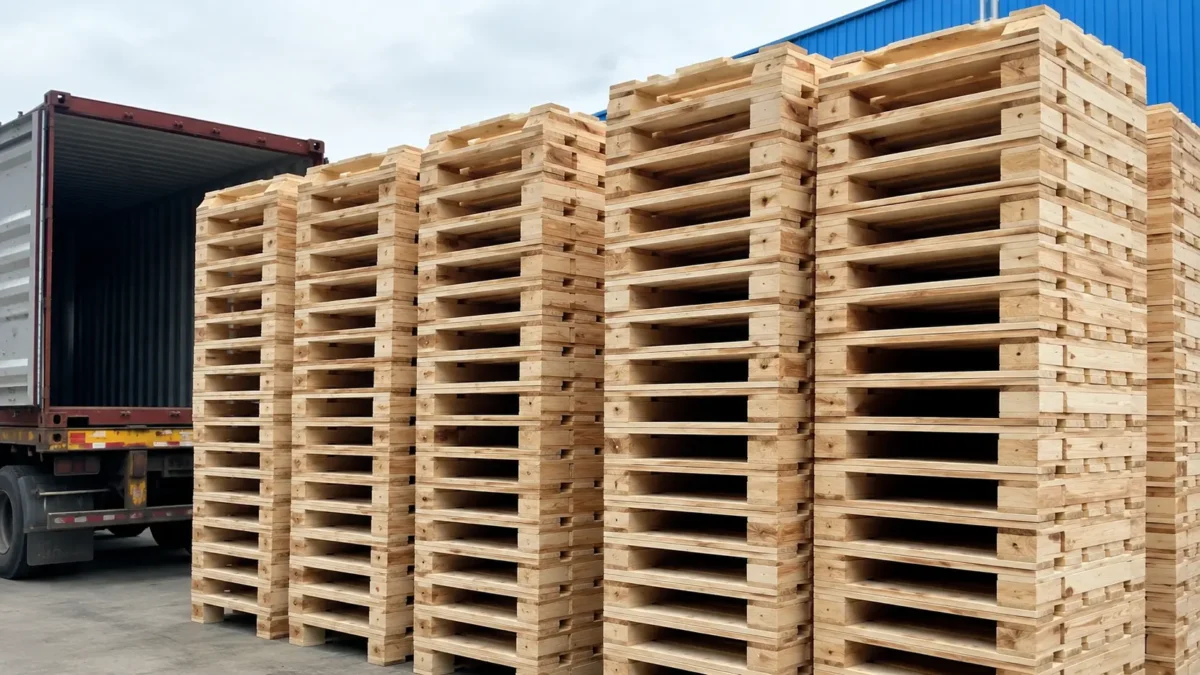
Export teams face a big question. Should you pick hardwood or softwood pallets?
Softwood pallets come from pine, spruce, or fir. They lead global freight today. They’re light. They’re cheap. They’re fast to produce. But they’re not right for every load.
 Before you choose softwood for your next shipment, learn where it shines. Also learn where it fails.
ISPM 15 compliance requirements apply to softwood too. Treatment and stamping are not optional for international shipments.
What Are Softwood Pallets?
Softwood comes from coniferous trees. Pine, spruce, and fir are common types.
These trees grow fast. That makes softwood cheap and easy to source.
Softwood pallets weigh less than hardwood pallets. They also cost less per unit. Most exporters use them for one-way or short-cycle shipments.
Pallet makers can also design softwood pallets to carry more weight. They add extra boards. They add extra blocks. This closes much of the strength gap with hardwood.
Why Exporters Keep Choosing Softwood
Global pallet use has shifted hard toward softwood. Cost drives most of this shift. Hardwood supply has also tightened in recent years. Prices for hardwood have climbed as a result.
Softwood plantations, especially pine, now supply most of the raw material. This keeps softwood pallets affordable and easy to source in bulk. For high-volume exporters, that steady supply matters as much as price.
Pros of Softwood Pallets for Export
-
Lower cost per pallet. Softwood trees grow fast. That keeps material costs low. For bulk export orders, this saves real money.
-
Lighter weight. A lighter pallet means less dead weight in a container. That helps you save on freight, especially on weight-capped shipments.
-
Easier to handle. Workers move softwood pallets faster. They cause less strain. This helps operations that handle hundreds of pallets a day.
-
Faster to manufacture. Softwood is easy to cut and shape. Manufacturers scale up fast during busy export seasons.
-
Better for sustainability. Softwood trees regrow fast. This supports a greener sourcing story for your business.
-
Flexible design options. Pallet designers can adjust board thickness and layout. This lets softwood pallets match specific load needs without switching to hardwood.
Cons of Softwood Pallets for Export
-
Lower load capacity. Softwood fibers are less dense than hardwood. This means lower weight limits, unless the design adds extra boards or blocks.
-
Higher moisture sensitivity. Softwood soaks up moisture faster than hardwood. On long sea trips, this can cause warping or mold if the wood isn’t dried well.
-
Shorter reuse cycle. Softwood wears out faster under repeat handling. This rarely matters for one-way shipments. But it matters for reusable pallet programs.
-
Not ideal for heavy or fragile cargo. Machinery and dense metal parts often need hardwood. Or they need a reinforced softwood design.
-
Needs proper kiln-drying. Without it, softwood can shrink or crack during transit. This adds a step exporters must not skip.
ISPM 15 Compliance for Softwood Export Pallets
Softwood pallets need the same treatment as hardwood before they cross a border. The standard method heats the wood core to 56°C for 30 minutes. After that, the pallet must carry the official IPPC stamp.
This rule applies no matter which wood type you choose. Customs officers check for the stamp, not the wood species. A missing stamp can hold your goods at the port.
Rules can shift by country. Check the ISPM 15 requirements for your export market before you finalize your order. Some countries also ask for extra paperwork alongside the stamp.
Softwood vs Hardwood: Quick Decision Guide
Pick softwood if your cargo is light to medium weight. Softwood also works well for one-way export shipments.
Pick hardwood if your cargo is heavy or fragile. Hardwood also fits returnable pallet pools better.
Think about your shipping route too. Long sea voyages raise moisture risk for softwood. Short routes or air freight lower that risk.
For a full comparison of strength, cost, and lifespan, read our guide on hardwood vs softwood pallets.
How to Get the Most Out of Softwood Export Pallets
Work with a manufacturer who understands export loads. Ask for kiln-dried timber. This cuts moisture risk during transit.
Also ask for a pallet design built around your actual cargo weight. A well-designed softwood pallet often performs close to hardwood. It does this at a much lower cost.
If your export volumes are high and margins are tight, certified softwood pallets can help. Build them to match your cargo weight. This cuts freight weight and cost. It keeps ISPM 15 compliance intact.
Conclusion
Softwood pallets aren’t a downgrade. They’re a different tool for a different job.
For most exports, light to medium weight and one-way use, softwood is the smart pick. For heavy or repeat-cycle cargo, hardwood still wins.
Match your pallet choice to your cargo, not to habit. That one decision can save you money on every shipment.
Get export-ready, ISPM 15-certified wooden pallets, built to match your load. Whichever wood type fits your shipment, we can build it.