
The Role of EPAL in Pallet Reuse
July 27, 2026
Common Myths About Wooden Pallet Sustainability
August 10, 2026
How Pallet Recycling Saves Money for Businesses
Every pallet you throw away costs you twice. Once to buy it. Again to dispose of it.
Most businesses only see the purchase price. They miss the disposal side entirely. That’s where the real savings hide.
 The EPA documented a case of pallet reuse cutting costs. A manufacturer saved over $500,000 in one year. They repaired and reused pallets instead of buying new ones.That’s not a small number.
The Two-Sided Cost of Throwing Pallets Away
Buying a new pallet costs money. So does getting rid of a broken one.
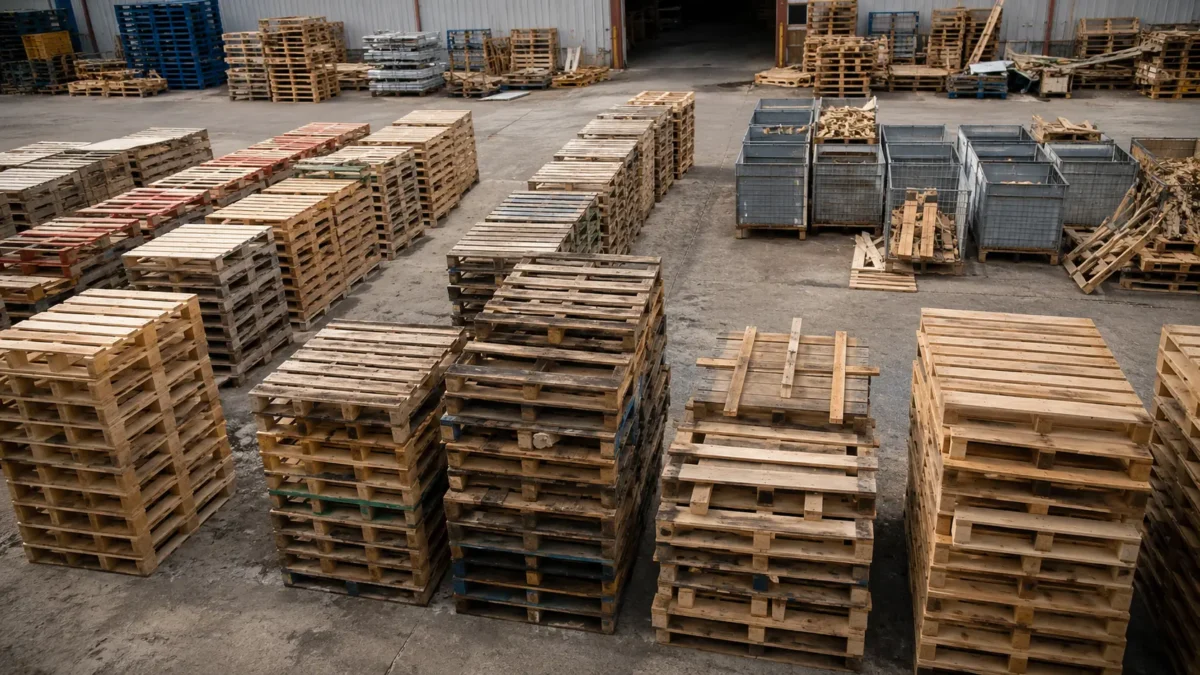
Disposal fees add up fast at scale. Sending pallets to landfills costs money. Hauling them away also costs money. Staff also spend time managing the pile. Most companies bury these costs inside general operating expenses. They never see the total.
Recycling breaks this cycle. Instead of paying twice, once to buy and once to dispose, you recover value on both ends.
How Pallet Recycling Actually Saves Money
There are several ways recycling puts money back into your business. Here’s the breakdown:
-
Lower purchase costs. Recycled or reconditioned pallets often cost less than new ones.
-
Reduced disposal fees. Fewer pallets going to landfill means lower waste hauling bills.
-
Buyback revenue. Some recyclers pay cash for used pallets in decent condition.
-
Less storage waste. Broken pallets piling up in a yard take up space you’re paying for.
-
Fewer replacement cycles. A repaired pallet delays the next full purchase.
Each of these adds up on its own. Combined, they can shift your total pallet spend significantly.
Recycled vs New: What You’re Actually Comparing
New pallets cost more upfront. But that price includes fresh timber, full manufacturing, and zero wear.
Recycled or reconditioned pallets skip most of that cost. A repaired pallet with sound boards and a solid frame performs close to new for most standard loads. The savings come from reusing structure that’s already there.
This isn’t the same as using junk. A well-run recycling program inspects every pallet before it goes back into service. Weak boards get replaced. Damaged blocks get swapped. What comes out the other end is safe to use, just cheaper to produce.
Why the EPAL Model Works So Well Here
Some pallet systems are built around recycling from the start. The EPAL exchange system helps pallets last longer. Licensed repair and exchange partners keep pallets moving. This means one pallet can be used for years, not just one trip.
Businesses that plug into a system like this skip most of the disposal cost entirely. The pallet never becomes your waste problem. It moves on to its next cycle instead.
Wood Type Affects Recycling Value Too
Not all pallets recycle the same way. Wood type plays a role in how well a pallet holds up through many repair cycles.
Our guide explains how different wood types affect pallet recycling and reuse. It also shows which wood species last the longest with repeated use. Denser woods often survive more repair cycles before they’re finally retired.
Choosing the right wood helps a pallet last longer. It can be recycled more times before it needs to be replaced.
Building a Recycling Program That Actually Saves Money
Start by tracking what you currently spend on both new pallets and disposal. Most businesses have never put these two numbers side by side.
Next, choose a supplier or recycler who checks and repairs pallets properly. Do not buy from someone who only resells damaged pallets. Ask what percentage of returned pallets they can actually repair versus scrap.
Finally, consider a buyback or exchange arrangement if your volume supports it. Even a modest buyback rate turns waste into revenue instead of an expense.
What Happens to Pallets That Can’t Be Recycled
Eventually, some pallets reach the end of their usable life. Even then, the wood doesn’t have to go to landfill.
Broken-down pallets get processed into mulch, particleboard, or biomass fuel. This keeps the wood in use even after the pallet can no longer be used. It completes the recycling cycle.
Conclusion
Pallet recycling isn’t just an environmental talking point. It’s a direct line to lower costs on both ends of the pallet lifecycle.
Smart businesses track both buying and disposal costs. They also recycle or exchange pallets. Over time, they spend less than businesses that always buy new pallets and throw old ones away.
Want pallets built for long-term reuse instead of a single trip to the landfill? Get durable, repair-ready wooden pallets built to lower your total cost per shipment.