
Common Myths About Wooden Pallet Sustainability
August 10, 2026
ISPM 15 Pallet Requirements Japan
August 24, 2026

How EPAL Standards Support Sustainable Logistics
Sustainability in logistics usually gets discussed in terms of fuel and packaging. Pallets rarely make the list. They should.
EPAL built its entire system around four principles: reuse, exchange, repair, and recycling. Each one has a direct sustainability payoff, not just a cost one.
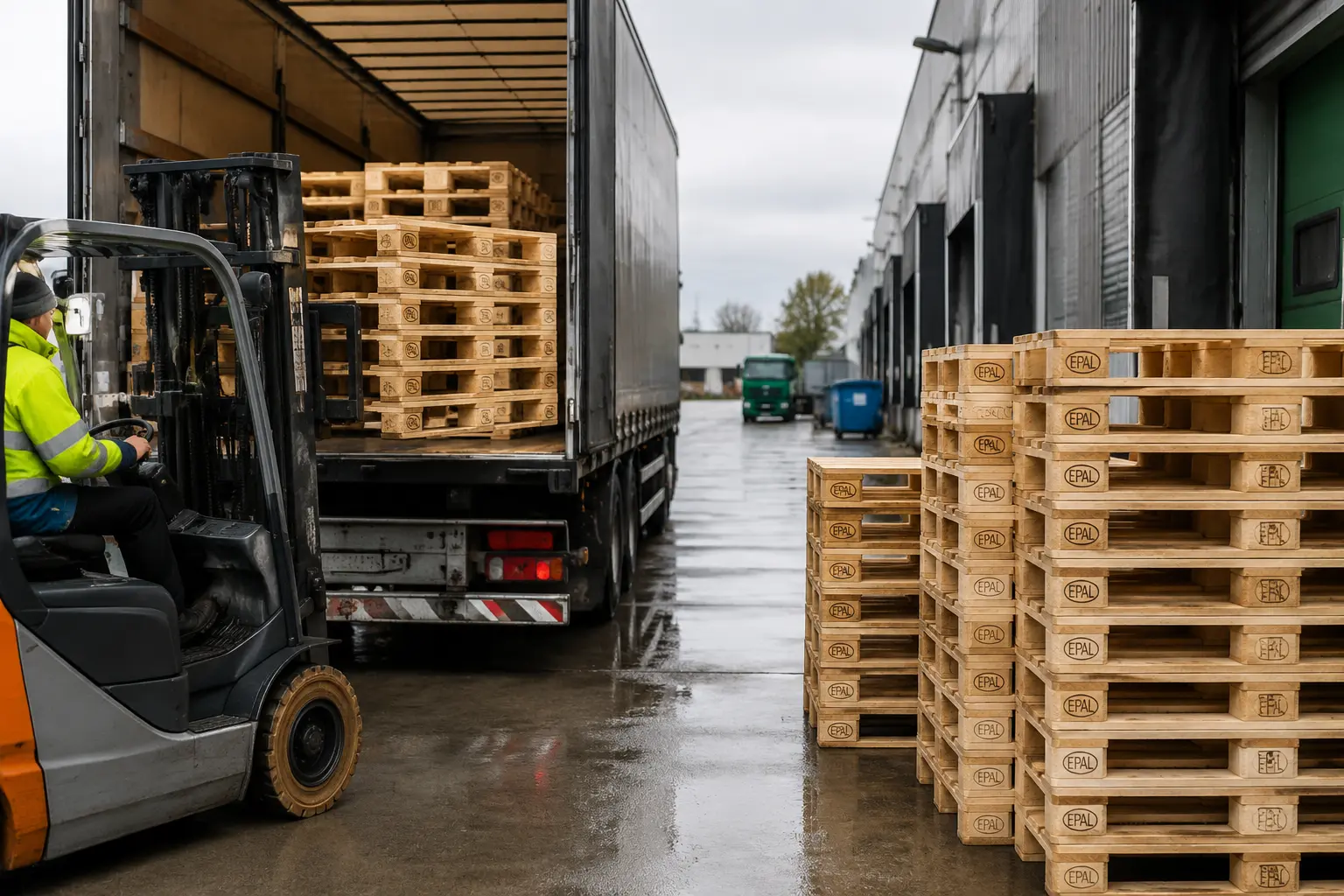 EPAL’s pallet exchange system keeps pallets in use for many years. It has been part of a circular economy for over 30 years. That’s not a marketing line. It’s a system built into how the pallets actually move.
Reuse: The Foundation of the Model
Most pallets get used once and discarded. EPAL pallets are designed for the opposite.
A single EPAL pallet moves through the exchange pool for years, not one trip. Every reuse cycle avoids the manufacturing footprint of a brand-new pallet. Reusing pallets reduces the need for new ones. This saves timber, lowers energy use, and cuts packaging waste.
This isn’t a side benefit. It’s the entire design intent behind the system.
Exchange: Keeping Pallets Moving Without Waste
The exchange system makes shipping easier. It also helps protect the environment.
A truck delivers goods on EPAL pallets. The receiving warehouse hands back empty EPAL pallets in return. No pallet sits idle in a corner. No truck drives empty pallets back over long distances just to return them.
Fewer empty return trips means lower fuel use across the network. EPAL works on a large scale. This helps cut unnecessary transport.
Repair: Extending Life Instead of Replacing It
Damage doesn’t end a pallet’s life in this system. Licensed repair centers fix cracked boards and loose blocks under strict rules.
Our guide explains the EPAL exchange pool. It shows how proper repairs help pallets stay in use for many cycles. Each repair avoids the environmental cost of producing a replacement from scratch.
This matters more than it sounds. Manufacturing is the most resource-intensive stage of a pallet’s life. Every repair cycle delays that cost, sometimes for years.
Recycling: Closing the Loop at End of Life
Eventually, a pallet reaches the point where repair isn’t practical anymore. Even then, nothing goes to waste.
Retired pallets get processed into particleboard, mulch, or biomass fuel. The wood’s carbon stays in use in some form, rather than being discarded outright. This closes the loop from raw timber through years of service to final material recovery.
Where the Timber Comes From Matters Too
Sustainability claims fall apart if the raw material isn’t sourced responsibly. EPAL requires licensed producers to follow strict standards. Reputable producers also use wood from managed and replanted forests.
Our guide clears up common myths about wood pallets. It explains why plantation-grown softwood does not carry the same deforestation concerns. That distinction matters when you’re building a sustainability case for procurement.
No Chemical Treatment Required
Some people assume export-ready pallets need chemical fumigation. Most EPAL pallets today use heat treatment instead.
Heat treatment kills pests by heating the wood. It does not use chemicals. This helps the pallet meet ISPM 15 requirements. It also avoids older chemical treatment methods.
What This Means for Your Supply Chain
If you ship to or within Europe, the EPAL system helps with logistics. It also gives you proof of your sustainability efforts.
Instead of making claims, you can show records of pallet reuse, repairs, and recycling. This helps when answering customer ESG questions. It also helps when creating your own sustainability report.
Getting Started with EPAL for Sustainable Logistics
Choose a licensed EPAL producer. Avoid suppliers who copy the EPAL look without proper certification. Ask about their repair rate and how many cycles their pallets typically survive.
Track your own pallet turnover too. If you buy fewer new pallets each year, your business is using the system more effectively.
Conclusion
EPAL’s four principles, reuse, exchange, repair, and recycling, aren’t abstract ideas. This system works. It has kept hundreds of millions of pallets in use for decades.
Businesses looking for sustainable logistics can enjoy this proven system.
Want pallets built to genuine EPAL standard, designed for the reuse cycle from day one? Get certified EPAL pallets built for sustainable, long-term circulation.