
ISPM 15 Pallet Requirements USA: Complete Compliance Guide
April 20, 2026
Repairing vs. Replacing Wooden Pallets: Which Is the Better Choice?
May 10, 2026

Why Hardwood Pallets Last Longer in Harsh Environments
Pallet failure does not happen in ideal conditions. It happens in real operations.
Rain. Heavy loads. Rough handling. Reuse cycles. These are the situations that test pallet strength.
Hardwood pallets are known to last longer in these conditions. This is not just a quality claim. It comes from how the wood is built.
Hardwood has a more complex internal structure.
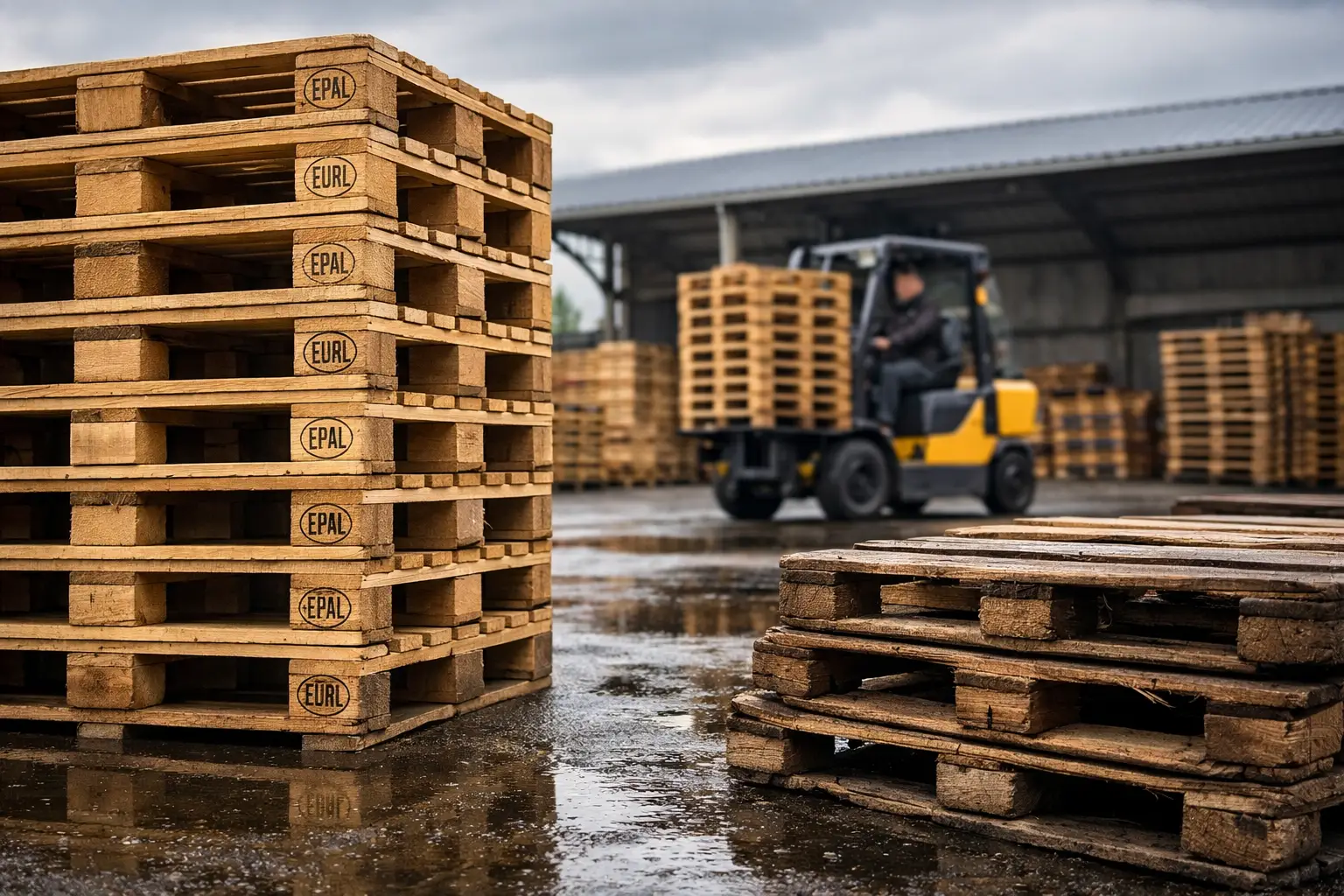 According to differences between hardwood and softwood structure and strength. This makes it stronger and more durable.
Hardwood has a complex structure. According to differences between hardwood and softwood structure and strength. it is stronger and more durable.
This guide explains why hardwood pallets last longer in harsh environments.
What Makes an Environment “Harsh” for Pallets
Not every warehouse is controlled.
Harsh environments usually include:
-
Outdoor storage with rain and humidity
-
Cold storage with temperature shifts
-
Heavy industrial loads
-
Repeated forklift handling
-
Long-distance transport
Example: A pallet kept outside during monsoon absorbs moisture. Over time, weaker wood starts to bend or crack.
Another example: In cold storage, temperature changes can weaken low-quality pallets faster.
These conditions expose the difference between hardwood and softwood very quickly.
These are typical harsh environments where pallet durability becomes critical.
Why Hardwood Pallets Last Longer in Harsh Environments
The main reason is density.
Hardwood is denser and stronger. It can handle more pressure without breaking.
It also has a tighter grain. This reduces damage from repeated impact and friction.
In daily operations, this means:
-
Less cracking
-
Less bending
-
Longer usage
Read this guide on hardwood vs softwood pallets comparison. It explains the difference in a simple way.
Better Resistance to Rough Handling
Handling damage is one of the biggest causes of pallet failure.
Forklifts lift pallets from different angles. Sometimes they hit edges or apply uneven force.
Softwood pallets tend to dent or split under repeated stress. Hardwood pallets resist this better.
Warehouse example: A logistics team handled metal components. They saw frequent pallet damage during loading. After switching to hardwood, breakage reduced significantly.
This also improved safety. Broken pallets can cause accidents during handling.
Higher Load-Bearing Capacity
Heavy loads need strong support.
Hardwood pallets can carry more weight without bending or collapsing.
This makes them ideal for:
-
Machinery
-
Industrial parts
-
Bulk export shipments
Softwood pallets may work for lighter goods. But under heavy loads, they may fail.
If your operation handles dense materials, choosing the right wood matters. This guide can help you choose the right wood.
It explains best wood for heavy-duty pallets in a simple way.
Better Performance in Harsh and Wet Conditions
Moisture weakens pallets over time.
Softwood absorbs water faster. This leads to swelling, warping, and decay.
Hardwood resists moisture better. It holds its shape even in humid environments.
Example: A warehouse storing goods outdoors during rainy season saw frequent pallet damage. After switching to hardwood, pallet life increased noticeably.
This reduces both replacement cost and handling issues.
Longer Lifespan in Reuse Cycles
Pallets are used again and again.
Each cycle includes:
-
Loading
-
Transport
-
Unloading
-
Storage
-
Reuse
Softwood pallets degrade faster with each cycle. Hardwood lasts longer.
This means fewer replacements over time.
Example: A warehouse using softwood pallets replaced them every few weeks. After switching to hardwood, the same pallets lasted much longer.
This improves operational efficiency.
Reduced Product Damage
Pallet strength also affects the goods placed on it.
A weak pallet can bend or break. This can damage products during transit.
Hardwood pallets provide stable support. This reduces movement and impact.
Example: In export shipments, unstable pallets can shift inside containers. Hardwood pallets help keep loads steady.
This protects both goods and reputation.
Cost vs Long-Term Value
Hardwood pallets cost more upfront.
But they last longer.
This reduces:
-
Replacement frequency
-
Damage to goods
-
Handling disruptions
Example: A company focused on low-cost pallets faced frequent breakage. Over time, replacement costs exceeded savings. Switching to hardwood reduced overall expenses.
So the real decision is not cost per pallet. It is cost over time.
When Hardwood Pallets Make Sense
Hardwood pallets are a better choice when:
-
Loads are heavy
-
Handling is rough
-
Storage is outdoor or humid
-
Pallets are reused multiple times
-
Shipments are long-distance
They are also useful for export shipments where pallet failure can cause delays.
When Softwood May Still Work
Softwood pallets are still useful in certain situations:
-
One-time shipments
-
Lightweight goods
-
Controlled indoor storage
-
Budget-sensitive operations
The key is to match pallet type to usage.
Common Mistakes in Pallet Selection
Many teams choose pallets based only on price.
This leads to problems:
-
Using softwood for heavy loads
-
Ignoring environmental conditions
-
Not considering reuse cycles
-
Mixing different pallet types
Example: A warehouse mixed softwood and hardwood pallets in one shipment. The weaker pallets failed first, causing load imbalance.
Consistency matters.
Impact on Operational Efficiency
Pallet choice affects more than durability. It affects daily operations.
Stronger pallets reduce interruptions. Teams spend less time handling breakage.
This improves:
-
Loading speed
-
Workflow consistency
-
Worker safety
Example: In a busy warehouse, repeated pallet failure slowed loading. After switching to hardwood, operations became smoother and faster.
Consistency in Standardized Operations
Standardization is key in logistics.
Using mixed pallet types creates inconsistency. Some perform well, others fail.
Hardwood pallets provide uniform performance.
This helps teams:
-
Predict load behavior
-
Reduce inspection time
-
Improve stacking
Example: A warehouse using mixed pallets faced stacking issues. Switching to hardwood improved stability and reduced damage.
Better Performance in Long-Distance Shipping
Export shipments go through multiple stages.
Warehouses. Trucks. Ports. Containers.
Each step adds stress.
Hardwood pallets handle this better. They maintain strength across multiple touchpoints.
This is critical for:
-
International shipping
-
Multi-stop logistics
-
High-value goods
A weak pallet may survive loading. But it may fail during transit.
Hardwood reduces that risk.
A Practical Way to Reduce Pallet Failure
If your warehouse handles heavy loads or harsh conditions, material choice matters.
Using durable hardwood pallets for heavy-duty and export use can help.
They reduce breakage. They improve handling. They last longer.
It also reduces the need for constant inspection and replacement.
Conclusion: Choosing the Right Pallet for Real Conditions
Hardwood pallets last longer because they are built for stress.
They resist impact. They carry more weight. They handle moisture and repeated use.
Softwood has its place. But in harsh environments, it often fails faster.
The smarter approach is simple:
-
Choose based on usage
-
Think long-term
-
Standardize your process
Stronger pallets lead to fewer failures, lower costs, and smoother operations. This is why hardwood pallets last longer in harsh environments.